🚀 Get to pre-production in weeks, not months, with private training direct from Jube’s developer — real sovereignty, zero vendor lock-in.
Native .NET MVC Pipeline
Jube is substantially a .NET ASP.NET application and uses the native MVC pipeline. It follows that certain injection risks are natively handled, and XSS risks are substantially reduced. Any malicious code is escaped far upstream of the software architectures.
For example:
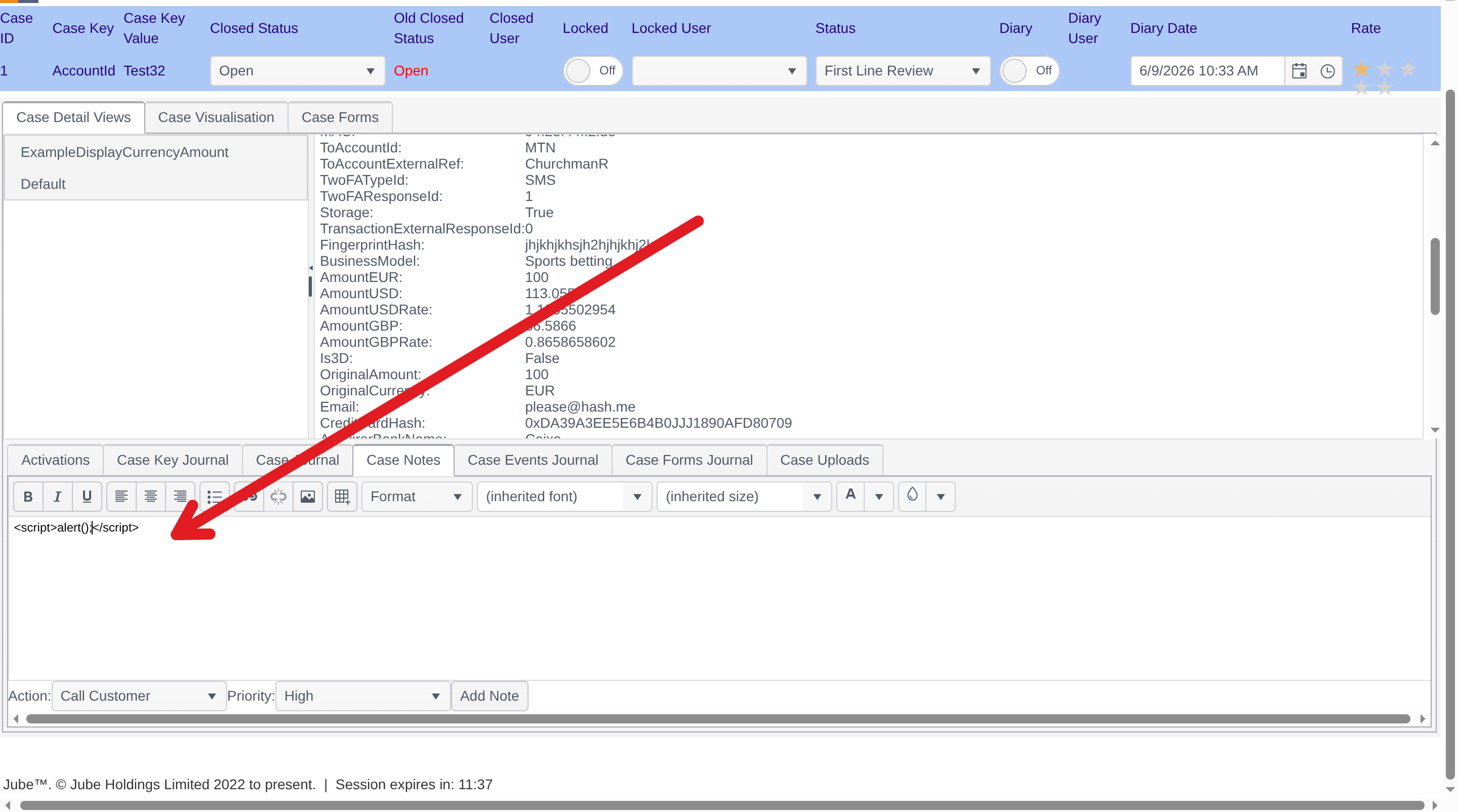
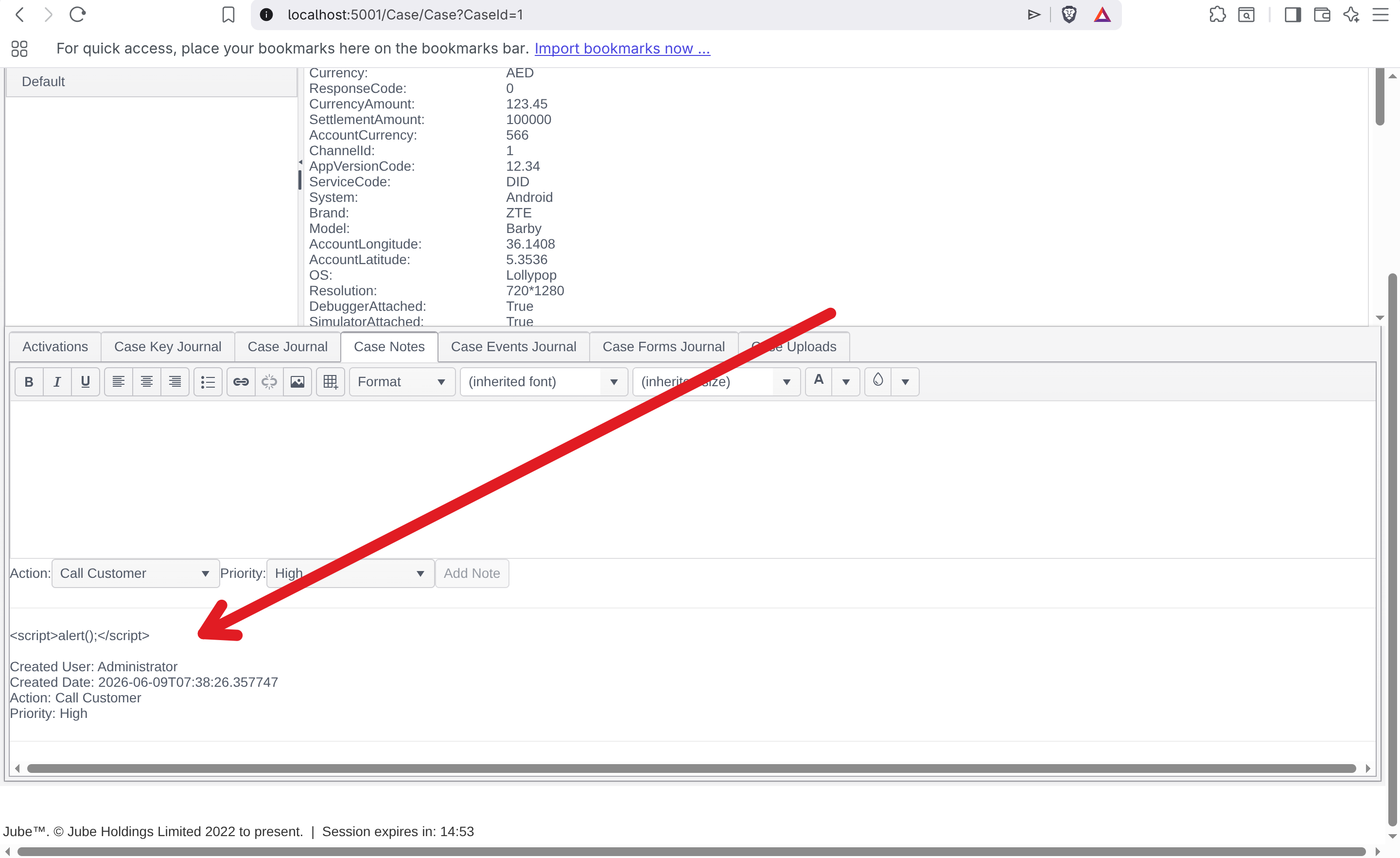
Unless developer mode is enabled explicitly, all errors rendered from the ASP.NET pipeline will suppress the actual error, and only general errors are communicated (Div by Zero thrown internally for the purpose of example):
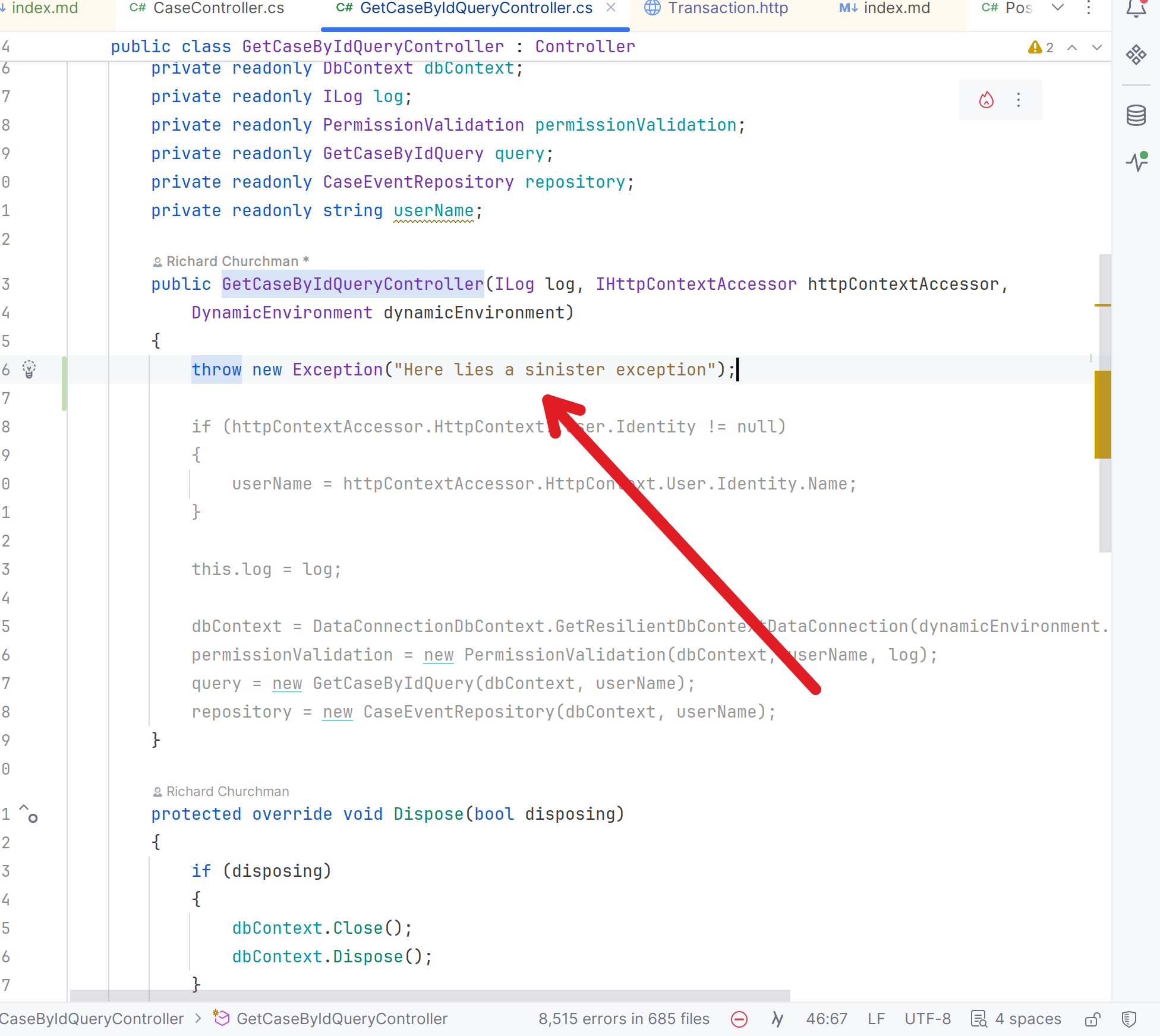
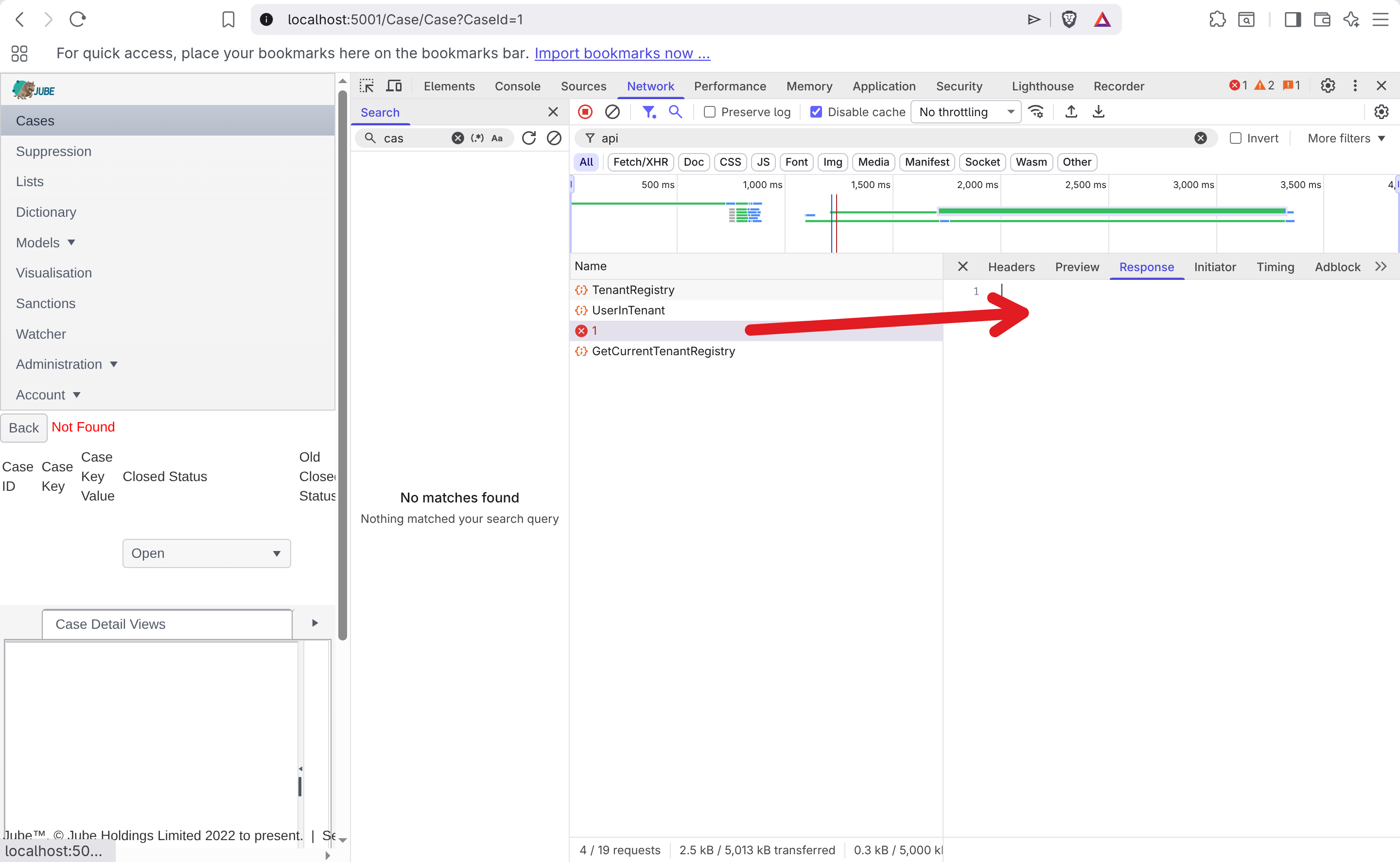
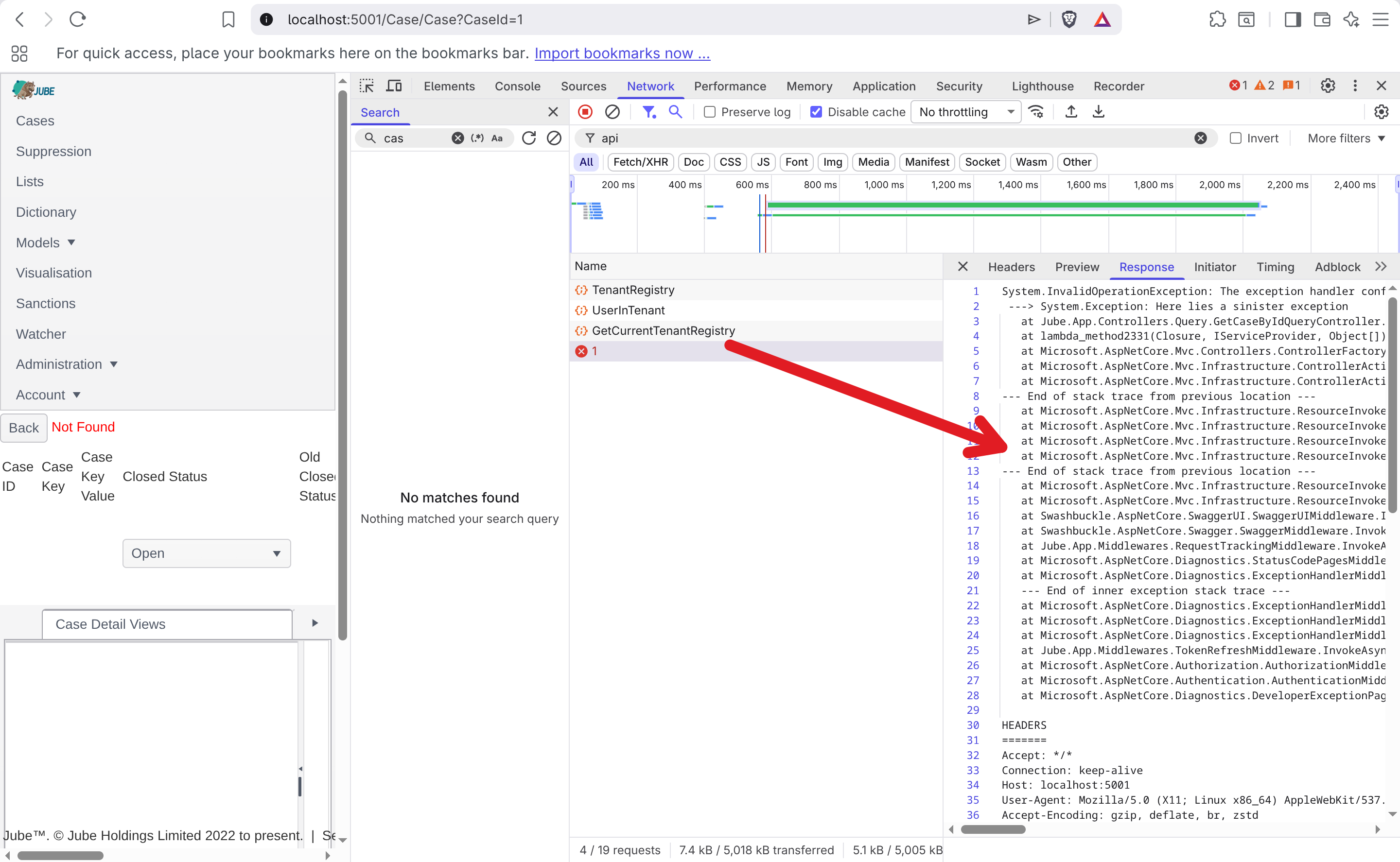
In developer mode, which is set via an environment variable, the picture is different:
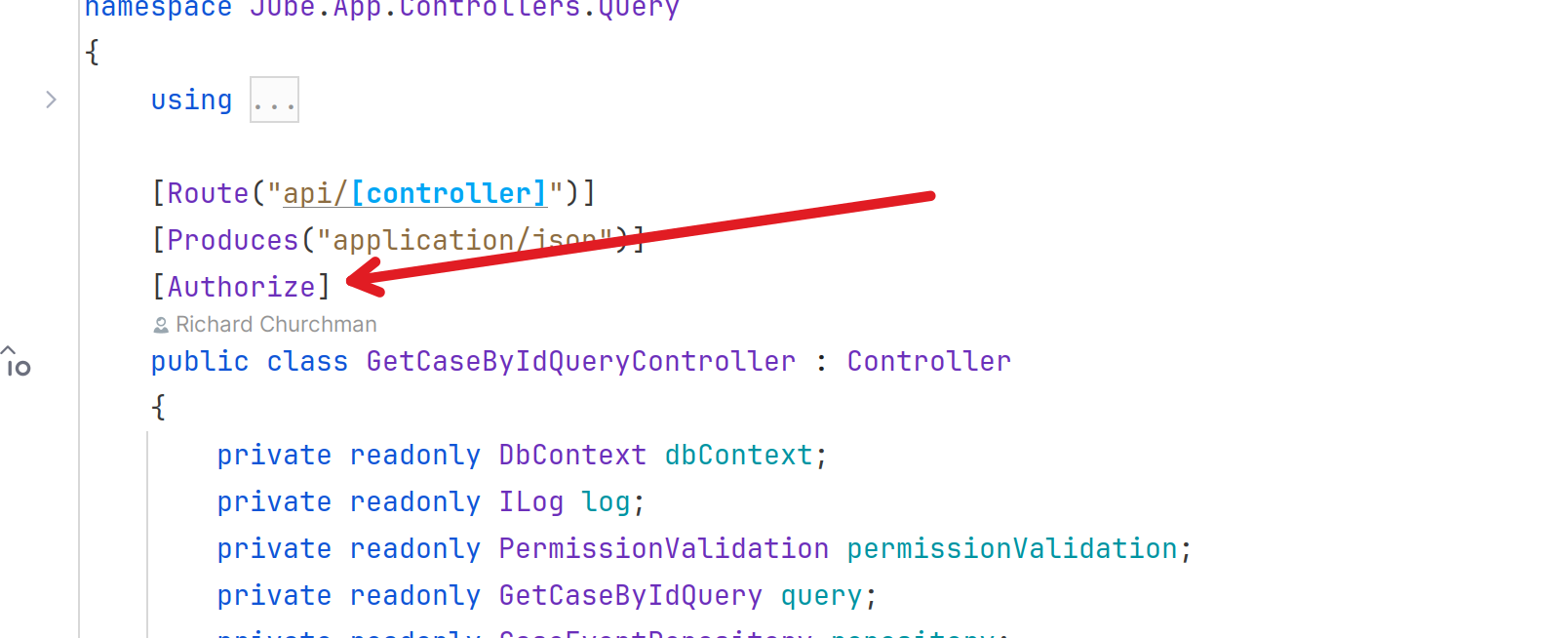
Authenticate Attribute Decoration
The .NET authentication pipeline is implemented, which takes care of identity. Every endpoint and page requires authentication, with the exception of a short, named list of anonymous routes: the login and logout endpoints and pages (/api/Authentication/ByUserNamePassword, WirePasswordHash and Logout, /Account/Login and /Account/Logout), the readiness probe (/api/Ready), the error and landing pages, and the mock endpoints used for demonstration. A test fails the build if any other route can be reached anonymously. For example:
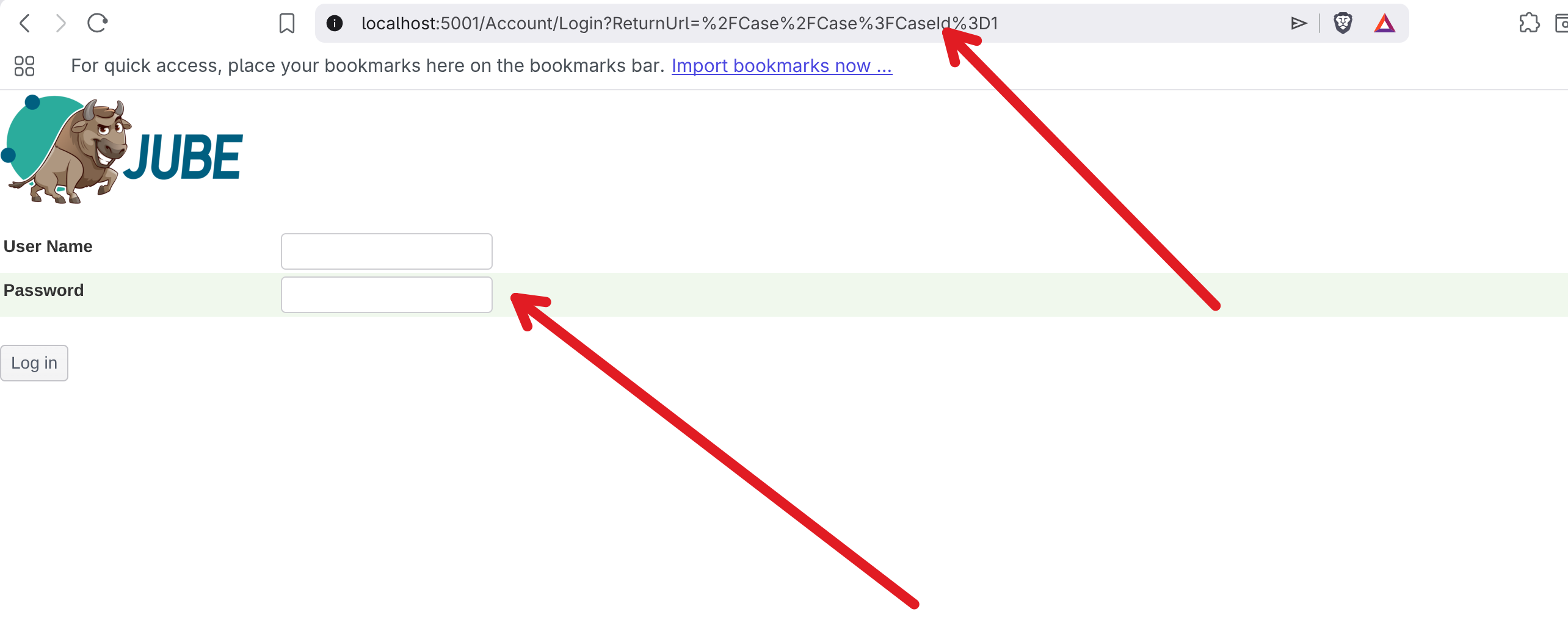
When authenticated, attempts to access this page without authentication will be redirected to login:
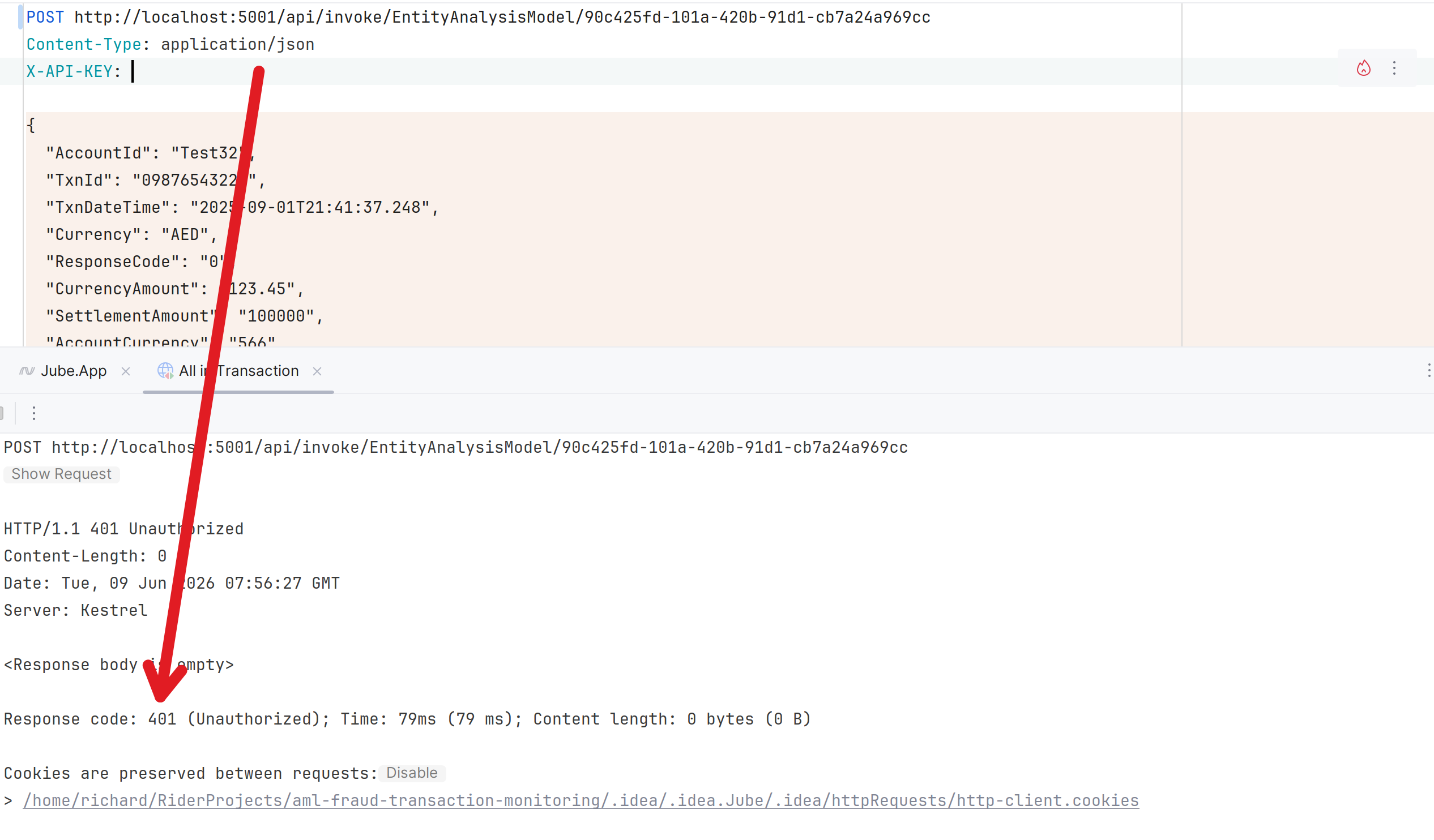
In the case of an API recall without authentication, this will be served a 401:
Data Transformation Object (DTO)
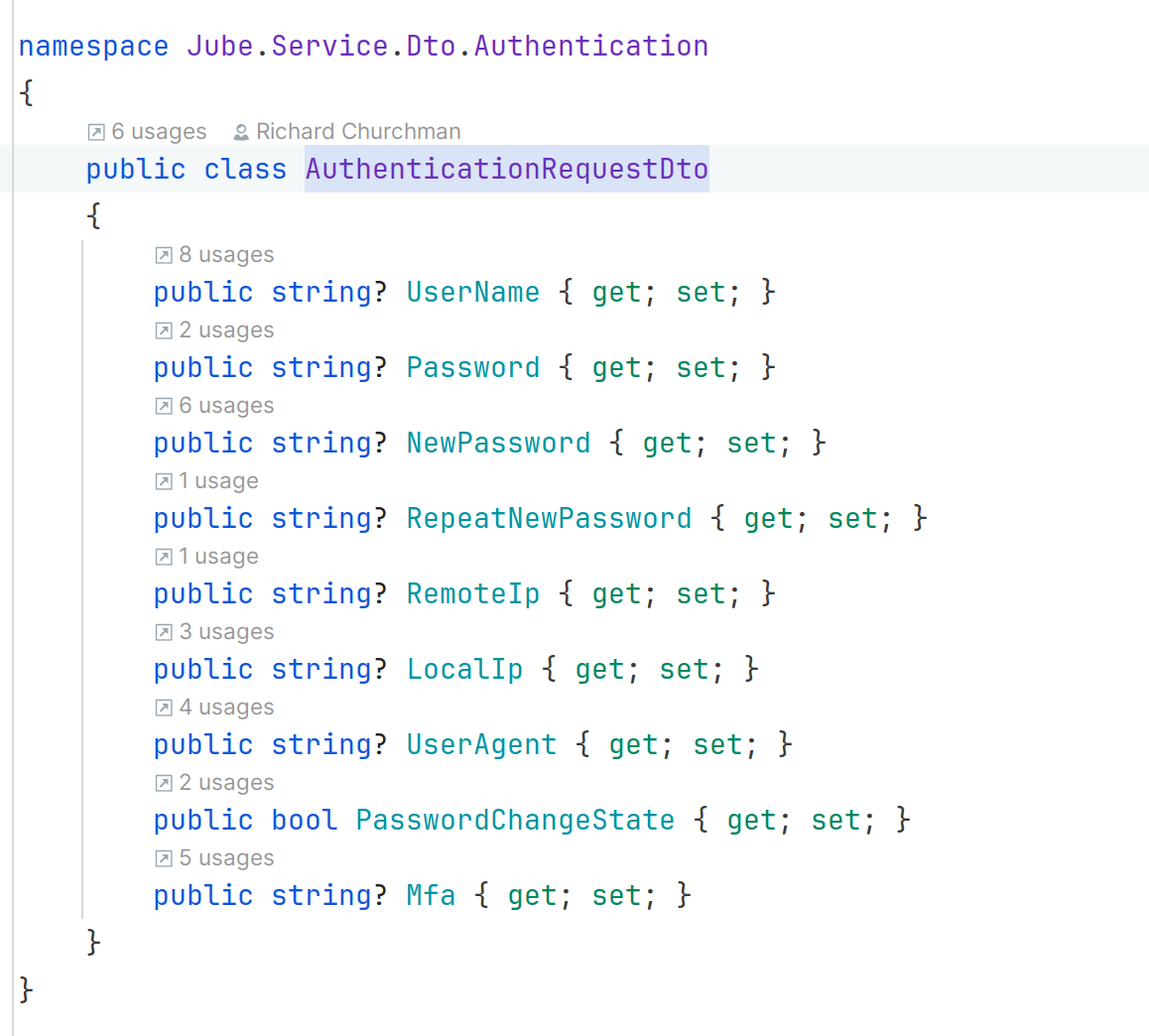
A DTO is a model (class) that exists for the sole purpose of serialising and deserialising data, to and from, a user’s request. For example, suppose the UI or independent service invokes an API endpoint with a JSON payload — the JSON payload must deserialise to the contract specified in the DTO. Taking the DTO AuthenticationRequestDto:
This DTO forms the contract for validation in the endpoint:
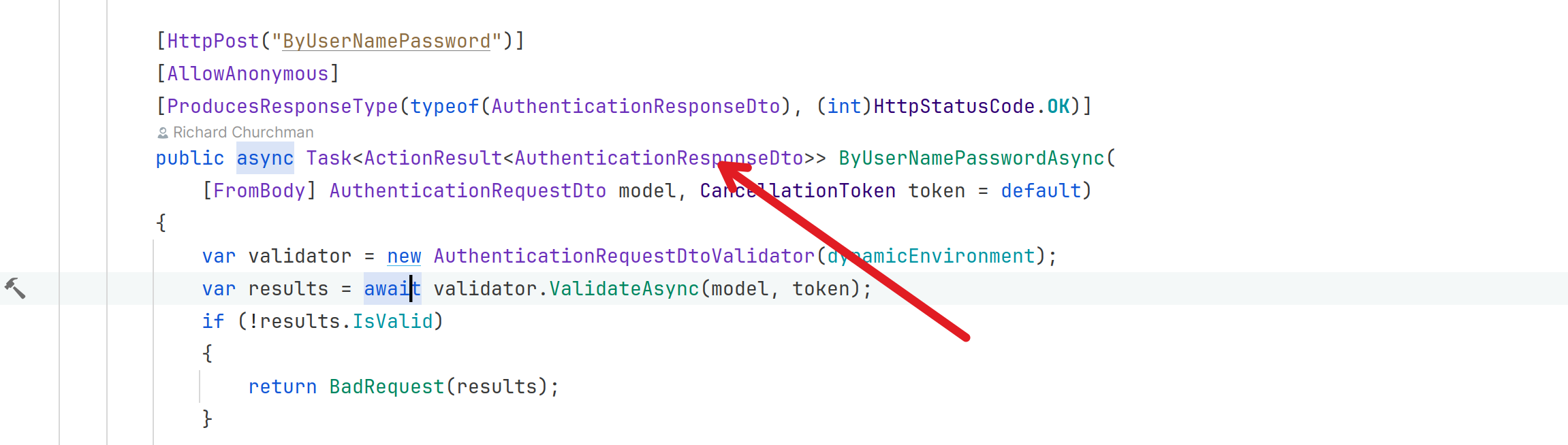
It follows that the first stage of validation is that the JSON passed to the endpoint serialises as per contract. In the event that it does not serialise, the endpoint will be passed null. Assuming a vague attempt to serialise to the DTO, the next step in each endpoint is validation via strongly typed validators. Fluent Validation is used as the very first step of controller logic:
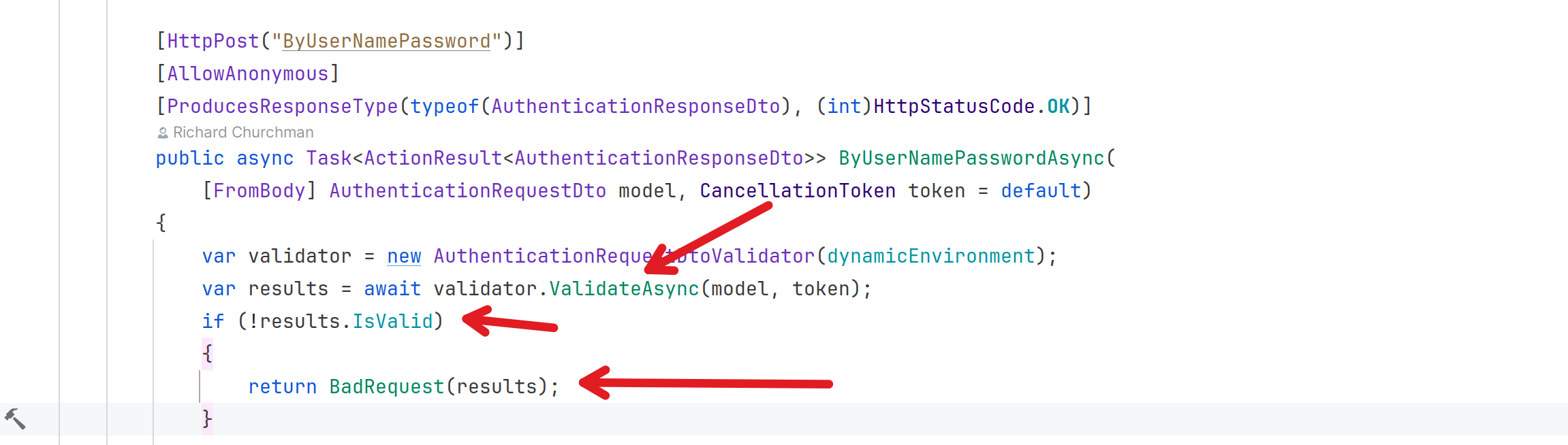
The validation will apply a series of validation rules which are more akin to rules:
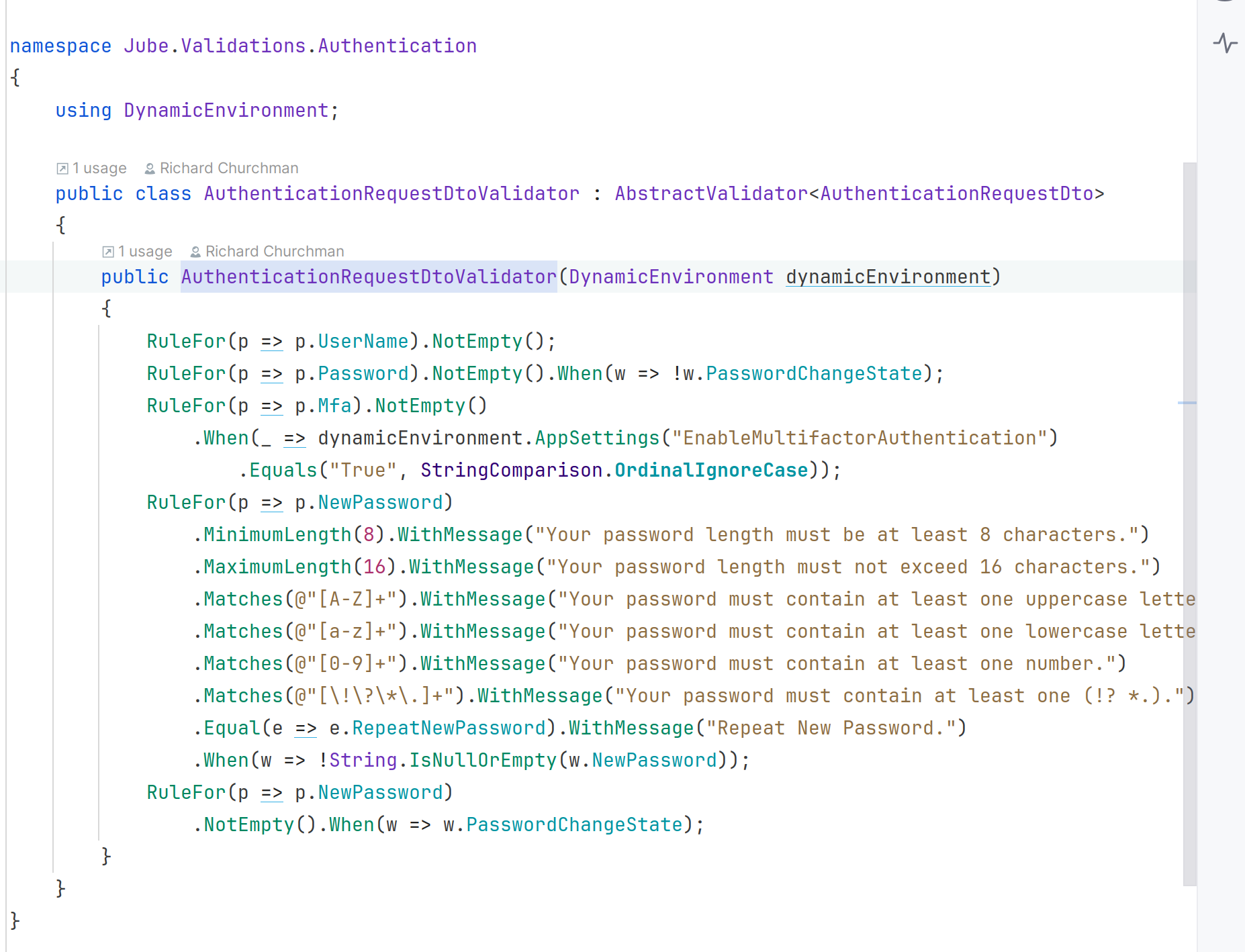
Assuming validation, there is other practical validation that takes place in the mapping of the DTO to the corresponding strongly typed data objects, which is handled directly as logic in the controller, or via AutoMapper where the data layer is being invoked.
It is worth special mention that .NET is a strongly typed programming language and there is no dynamic invocation of code.
Dynamic SQL Validation
The vast majority of the database interactions take place via repository patterns, where each repository performs database interactions via strongly typed C# LINQ2DB, an Object Relation Mapper (ORM) which is transposed to SQL without intervention from the developer. It follows that parameterisation is almost universally assured and there is no means to inject SQL where ORMs are used.
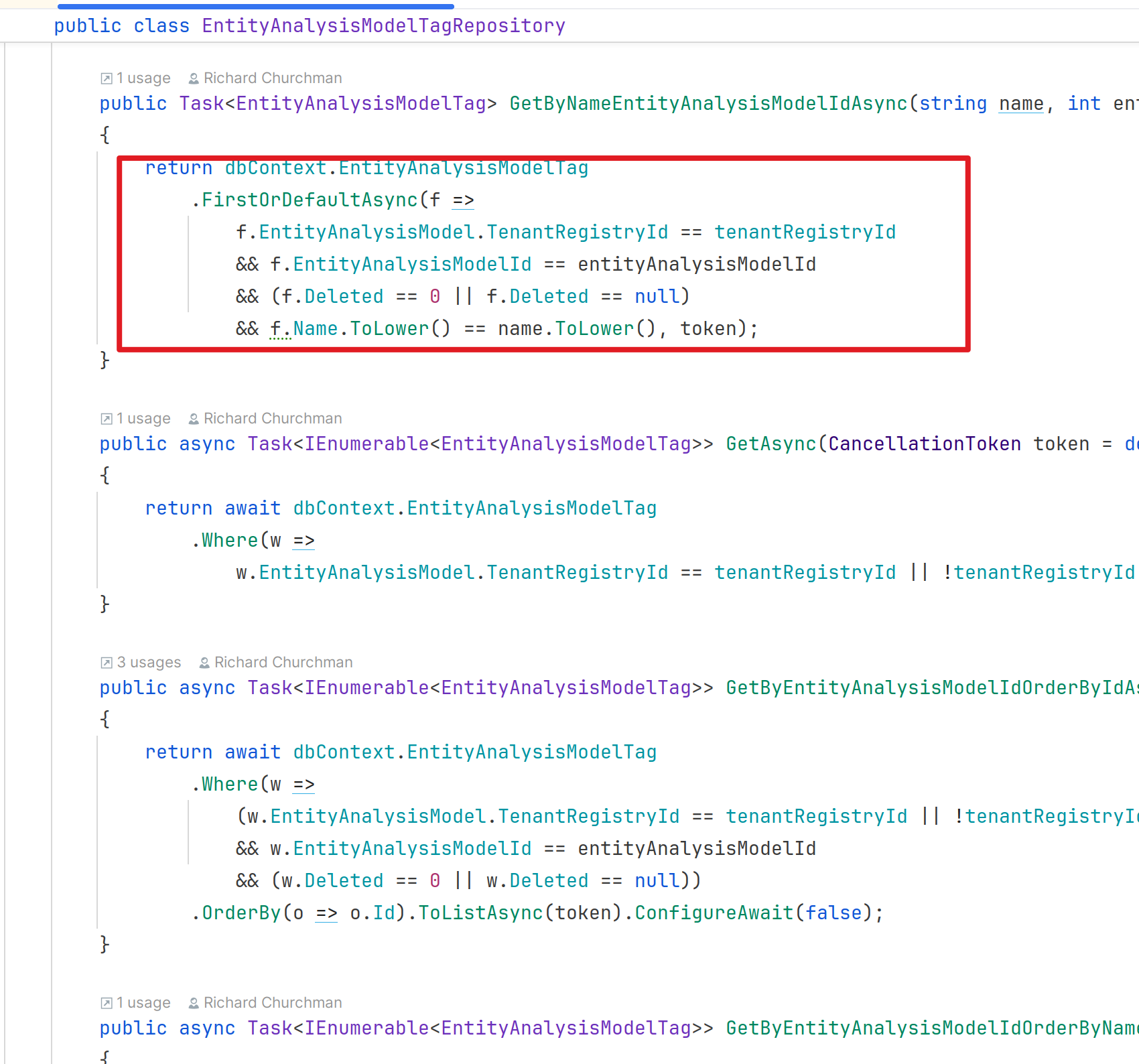
There are certain cases where the repository pattern is not appropriate, and in such cases LINQ remains the first choice to constitute a query, albeit with a query pattern:
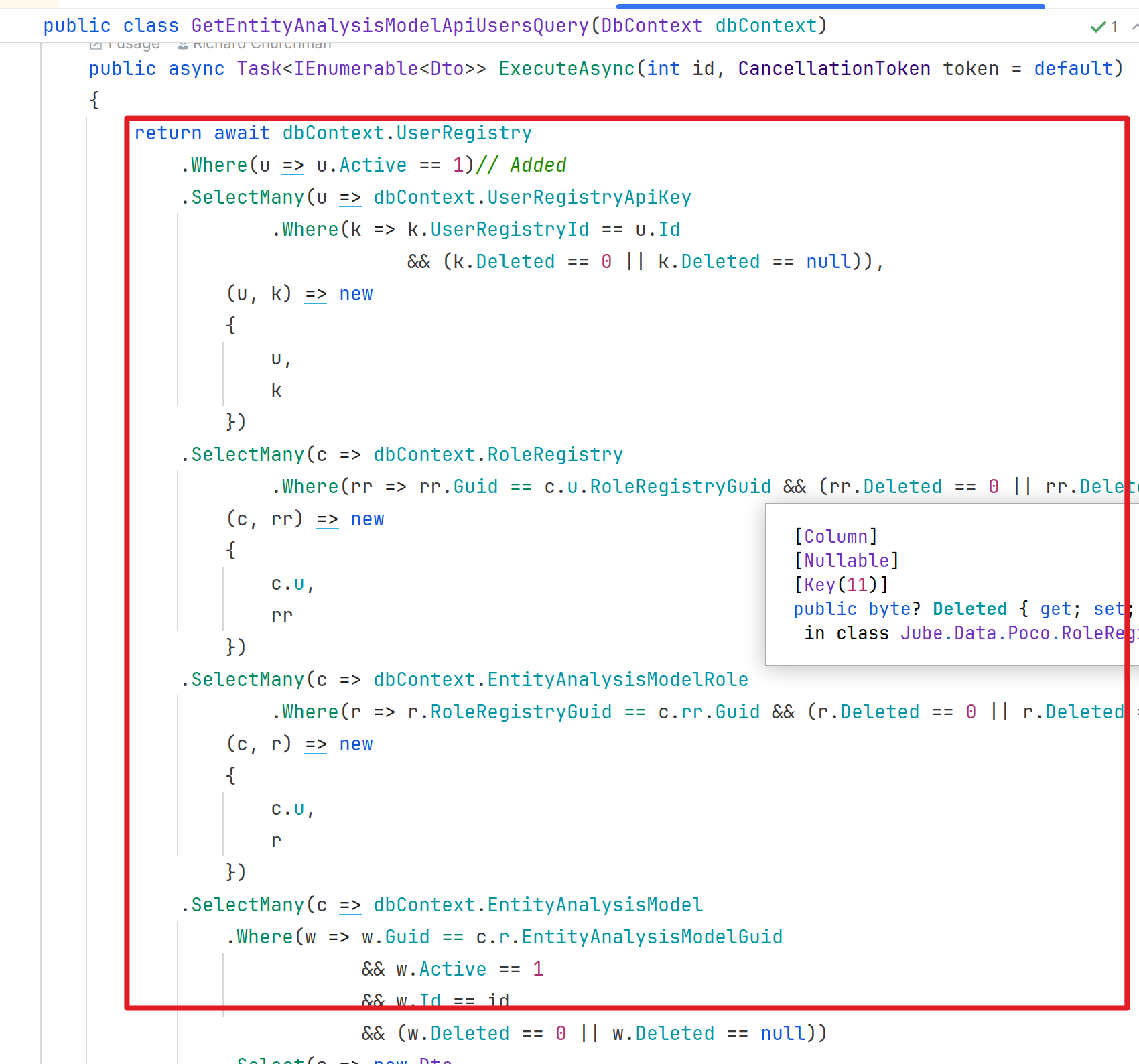
In certain cases, and it is minimal, amounting to around ten database interactions across the whole platform, there is rendered and truly dynamic SQL constructed. In such cases parameterisation is fully implemented, and is something that our own software scanners monitor for (in the form of direct user input mapping to SQL inputs):
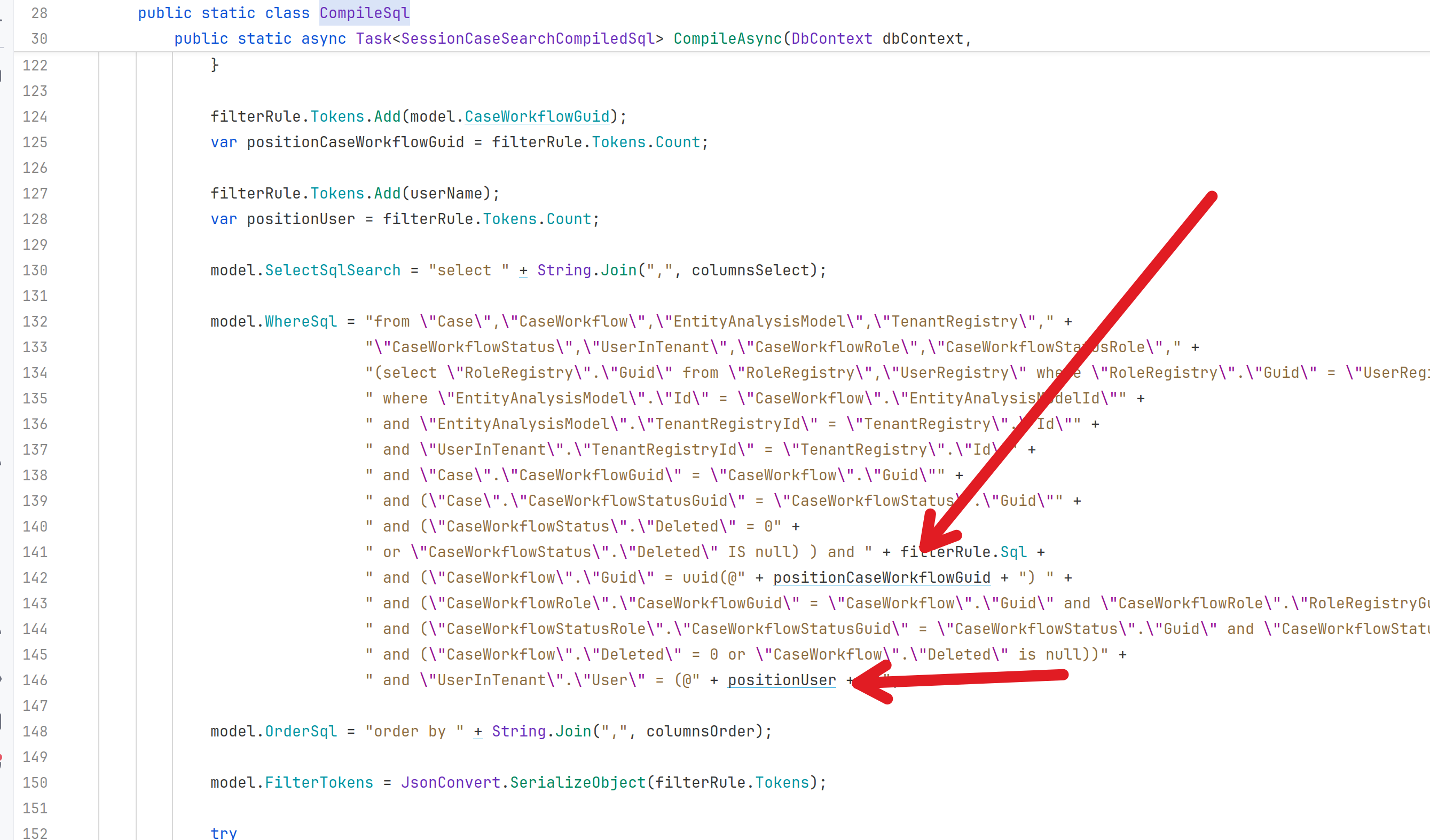
In the case of all dynamically generated SQL, they are executed only via read replicas and database service accounts that only have access to read. Yet notwithstanding, there exists a further level of validation for all dynamically generated SQL, in the form of the Assert Select Only Parser, which uses the Postgres SQL libraries to perform a parse of the SQL and allow only on it being of the form SELECT:
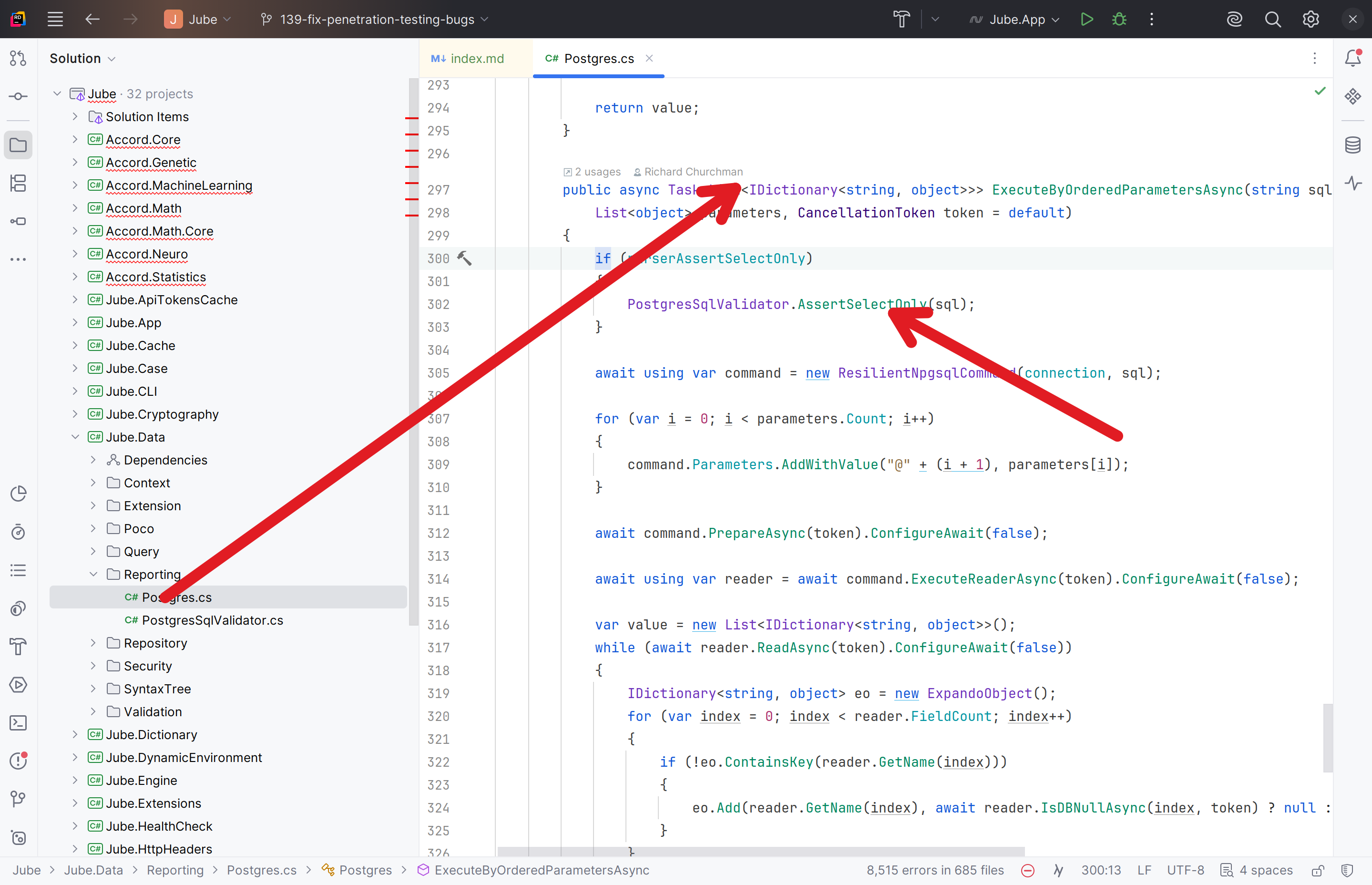
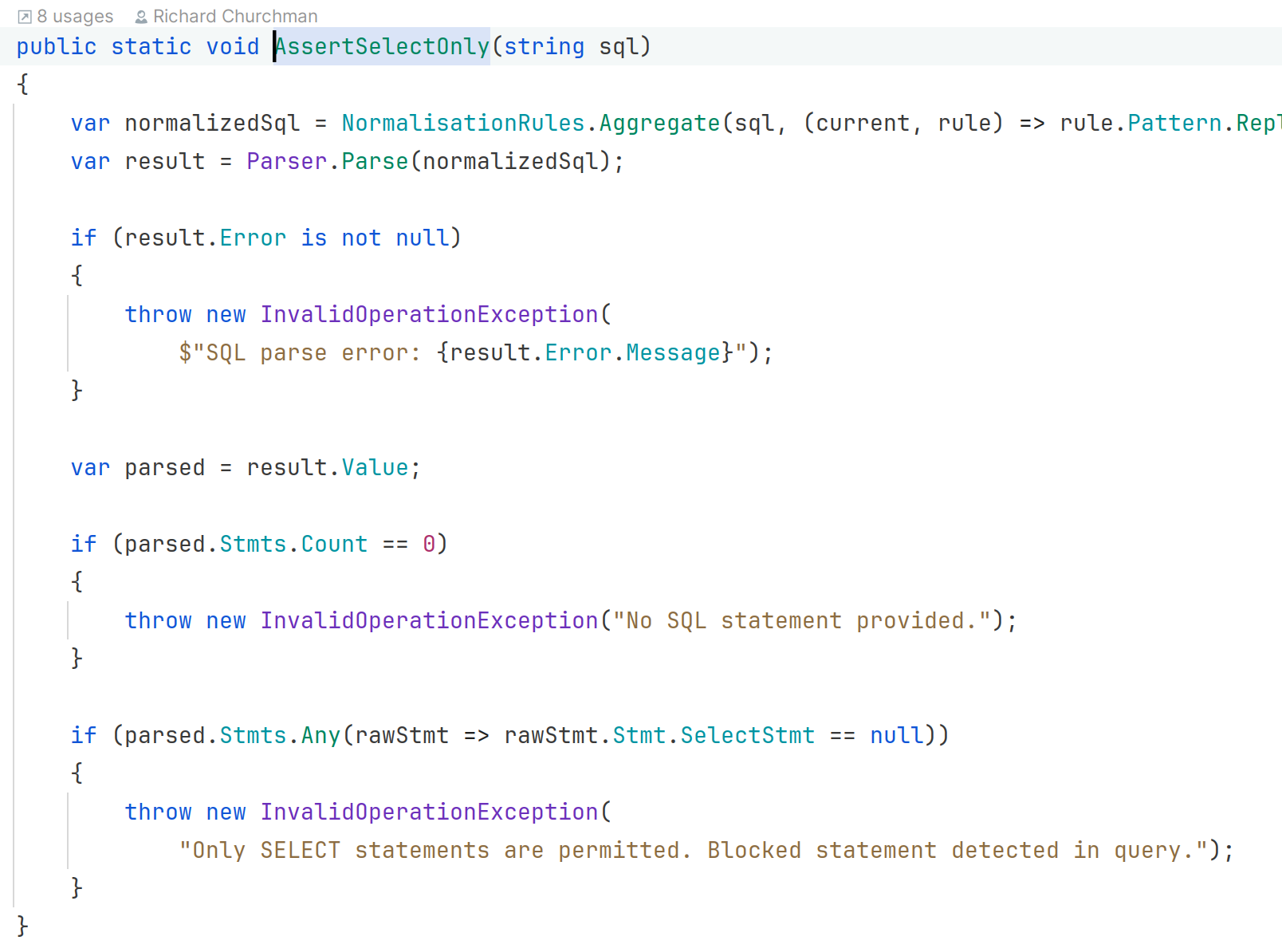
In the case of malicious SQL, the query will simply fail and log out the exception.
The parser walks the whole syntax tree rather than matching text, so comments, letter case, whitespace, unicode and dollar quoting cannot disguise a statement. Exactly one plain SELECT is accepted; anything that writes (including data modifying WITH clauses and SELECT INTO), locks rows (FOR UPDATE), stacks a second statement or changes session state is refused, as are functions that sleep, change settings or sequences, read the server file system, open connections or return the text of another query (pg_sleep, set_config, nextval, lo_import, pg_read_file, dblink, query_to_xml and the like), and the system catalogues. SQL a user authors (Visualisation Datasources) is additionally refused access to the identity and credential tables (UserRegistry, TenantRegistry and their siblings). Execution then runs inside a read only transaction with a statement timeout (30 seconds) and a ceiling of 100,000 rows, so that the database itself refuses a write and a runaway query is cancelled even if the parser were to miss something.
The Assert Select Only Parser is unconditional: there is no Environment Variable or other switch that bypasses it, so this validation layer applies to every dynamic SQL execution path in the platform with no opt-out.
There exists one administrator-only page which allows for the embedding of SQL:
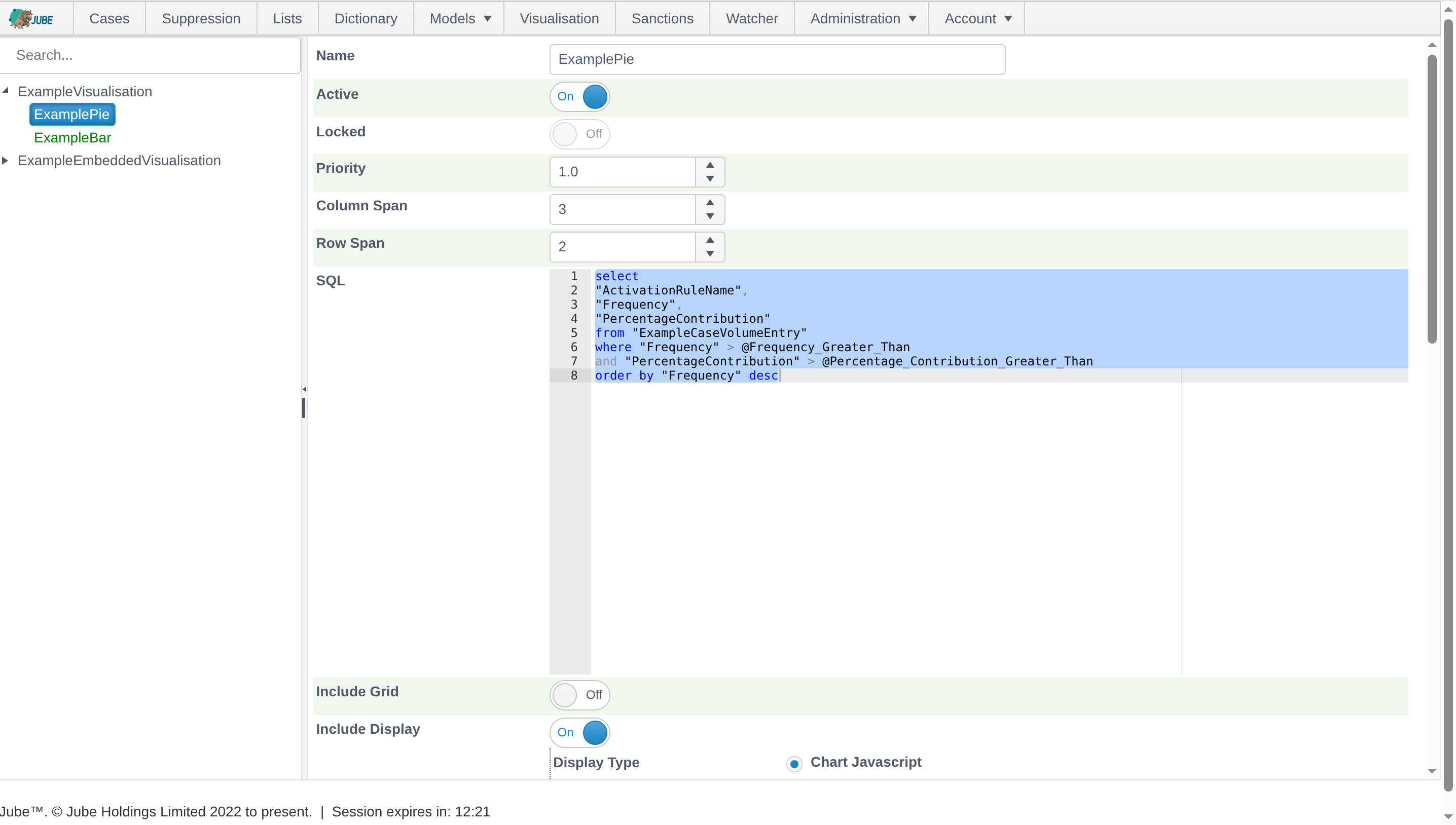
Noting the Assert Select Only Parser.
Validation of Dynamic .NET via Rule Token Parser
The rules engine operates by the compilation of .NET code dynamically, on model synchronisation. It stands to reason that this would be a significant attack vector. The validation is more comprehensively explained in the Rule Parser section of the Rule Compilation Algorithm, but it suffices to say that .NET code is filtered on a token basis for allowed tokens only.
In addition to the token allow-list, the parser rejects rule text that nests expressions beyond a fixed depth (MaximumNestingDepth, 64) before the text is ever handed to the compiler. Pathologically nested input — long runs of the unary Not or - operators, or deeply nested parentheses and function calls — can otherwise exhaust the compiler’s stack, and a stack overflow in .NET cannot be caught and terminates the whole process. A legitimate rule nests only a handful of levels deep, so the limit is invisible in normal authoring; a rule that exceeds it is refused in the same way as one carrying a restricted token, in well under a millisecond, before any compilation is attempted.
This guard, and the hostile-rule corpus it sits alongside (process execution, reflection, file and environment access, and known VB escape tricks, each checked under a dozen obfuscation spellings — case, whitespace, comments, line endings, byte-order mark, homoglyphs, zero-width characters), are proved directly against the parser by 1,649 unit tests that need no database or HTTP host and run in about twenty seconds, in addition to the same corpus’s coverage through the live HTTP endpoint. See Automated Penetration Testing below.
Web Application Firewall
The layers above validate the shape of a request (its contract, its identity, its permissions) and the content of the two places where user text becomes executable — dynamic SQL and the rule language. The Web Application Firewall adds a general, content-level layer in front of the application that inspects the values carried by any request against a set of signatures, records every match, and — for signatures configured to do so — refuses the request. It is aimed at the OWASP Top 10 content classes (SQL injection, cross-site scripting, path traversal, template injection, XML external entity, OS command injection, null-byte) rather than network-level signatures.
It is defence-in-depth and audit, not a replacement for the structural defences described above: parameterised queries, the Assert Select Only parser, the rule token parser, output encoding, authentication and RBAC remain the primary controls. The WAF is a second net, and a record of what was thrown at the application.
Disabled by default
The WAF is controlled by the WafEnabled Environment Variable, which defaults to False. Because a dropping signature rejects a matching request with 403 Forbidden, and because a fraud or anti-money-laundering payload can legitimately contain text that resembles an attack — a transaction narrative, or a name such as Jean-Pierre O'Brien, containing an apostrophe, angle brackets or SQL-looking words — it is intended to be enabled deliberately, once its signatures have been reviewed and any needed exceptions added. See Web Application Firewall for the full operator’s guide and Environment Variables for the Waf* settings.
What is inspected
A single rule set — read from the database, compiled, and swapped in atomically on a poll — is evaluated against three request surfaces, each with a scope flag so a signature can be limited to one of them:
- Path: the request path.
- Query: each query-string value.
- Body: each string, number and boolean value of a JSON request body, addressed by a JSON path such as
$.customer.name; object keys are inspected too. A body that is not JSON, is larger thanWafMaxInspectBytes, or belongs to a WebSocket upgrade or streaming request, is not buffered — its path and query are still inspected.
The inspection core is transport-agnostic and is reached from two call sites so that the signatures and the audit trail are shared: the HTTP middleware for ordinary requests — which also covers the path and query string of the Server-Sent Events streaming endpoints, since they are reached through the same pipeline — and any future streaming handler that could inspect events written onto an already-open stream.
The three tables
- WafSignature — the signatures. Each row is a name, an OWASP category, a description, a .NET regular-expression pattern, a target scope, a per-row match timeout, a Drop flag and an Active flag. A signature whose Drop flag is set refuses a matching request; a signature with Drop cleared is detect-only — the match is recorded but the request continues. A pattern that fails to compile is logged and skipped, so one bad row cannot stop the WAF loading. A starter set covering the OWASP content classes above is seeded by migration.
- WafException — the allow-list, and the escape hatch for false positives. Each row is a route regular expression (required), an optional field regular expression, and an optional signature reference. An exception suppresses a match when its route regex matches the request route, and — where given — its field regex matches the matched field’s name and its signature reference is the signature that matched. A row with no route regex is skipped, so a blank exception can never silently disable the WAF. This is how a specific free-text field on a specific route — a case narrative, a customer name — is exempted without weakening the signature everywhere else.
- WafAttack — the evidence log. Every match, dropped or detect-only, is queued in memory and bulk-inserted here on a short interval. Each row records the transport, route, method, remote IP, user (when known), the matched signature and category, the matched field’s JSON path, a truncated copy of the matched value, the action taken, a correlation id and the instance name. The table carries trigram (
pg_trgm) and btree indexes on the same basis as the other operational log tables, so it can be searched and filtered from the DevOps pages.
Guarding the guard
A content firewall driven by regular expressions is itself a potential denial-of-service surface: a pattern with catastrophic backtracking, fed a hostile input, can hang. Every signature and exception is therefore compiled with a match timeout, capped at WafMaxRegexTimeoutMilliseconds, and a match that times out is treated as a non-match rather than being allowed to hang the request. JSON traversal is likewise bounded in both depth and number of values, and the request body is only buffered up to WafMaxInspectBytes, so the inspection cost of any one request is bounded.
Rolling it out
Because signatures and exceptions are read from the database on a poll, they can be added, edited or disabled with no restart. The intended sequence is tune-then-enforce: begin with signatures as detect-only, watch the WafAttack table for false positives, add WafException rows for the legitimate ones, and only then set the Drop flag where you are confident.
66 tests (unit and database-backed) cover every seeded signature against its matching attack, against a set of benign look-alike payloads that must not match (an ordinary transaction narrative, a name such as Jean-Pierre O'Brien), the exception mechanism, scope, detect-versus-drop behaviour, and a real catastrophic- backtracking pattern proven not to hang a request.
Automated Penetration Testing
Every control described above is verified continuously, and the penetration tests in particular run against a real host rather than a test double. The suite starts Kestrel on an ephemeral local port and drives it with a plain HTTP client, so routing, middleware, serialisation and status codes are exactly those a caller meets on the wire; nothing is short-circuited for the convenience of the test.
Suite composition
Jube.Tests holds 7,689 test methods across 485 files, carrying 14,850 written assertions. Because a [Theory] executes once per data row, those methods expand to 19,566 executed cases:
| Category | Cases | Proves | Requires |
|---|---|---|---|
Unit | 8,080 | logic in isolation | nothing |
Service | 5,393 | behaviour against the real database, with Jube.Tests/Volume | Postgres |
PermissionParity | 20 | that the permission surface matches its declared shape | Postgres |
PenTest | 6,073 | the controls on this page, under real attack traffic | Postgres and Kestrel |
The assertion count is the conservative measure, and most so for the penetration tests: a single method drives a whole payload corpus and checks every response as it returns, so an assertion written once is made thousands of times at run time. The monitoring sweeps alone issue 25,670 requests, each checked for status, shape, content type, credential leakage, reflected markup, header injection and timing.
Coverage
Coverage follows the OWASP API Security Top 10 (2023) and the relevant OWASP ASVS and Top 10 web items, in two layers.
A generic layer reads every mapped route from EndpointDataSource — Minimal API and MVC controller alike — and applies the same checks to all of them:
- anonymous access is refused except on a short, explicit allow-list (login, logout, the readiness probe, the error pages and the demonstration mocks), and the suite fails if the anonymous-reachable surface ever drifts from that list;
- every route is checked for verb tampering, oversized and malformed request bodies, content-type confusion, and null-byte or traversal characters in route parameters;
- no error response may carry a stack trace;
- Swagger and static file serving are checked for what they expose to an unauthenticated caller.
Targeted suites follow the platform’s own structure — Identity, Model, Case, Permissions, the dynamic SQL surface, Monitoring, Observability, Visualisations and the query families each have their own — and exercise the authorisation matrix for every role, cross-tenant object references using real seeded identifiers from a second tenant (Broken Object Level Authorization), the hostile-rule and dynamic-SQL corpora described above, mass assignment of server-controlled fields (Id, TenantRegistryId, CreatedUser, Deleted, Locked), type confusion and malformed or deeply nested JSON, and the particular attack surface of each feature, such as a case workflow’s role grants or the SQL gate’s obfuscated write statements.
Findings policy
A finding is fixed in production code and then held by a permanent regression test at the fastest level that can prove it, so that the regression signal does not depend on standing up the HTTP harness. The rule-parser nesting-depth guard and the Web Application Firewall both arrived this way, and both carry close-to-the-code coverage of their own: 1,649 parser tests that need neither a database nor a host, and 66 for the firewall.
A capability that is an intentional trade-off rather than a defect is recorded as accepted by design and is not re-raised on each run. The administrator-only page that executes read-only SQL, and the case workflow macro that makes an outbound HTTP call, are both of this kind.
Running the suite locally
Unit needs nothing beyond dotnet test. Service and PenTest need a real Postgres instance and read its connection string from JubeTestConnectionString, an ordinary Npgsql connection string (Host=...;Port=...;Database=...;Username=...;Password=...;) pointed at the database that docker-compose creates locally. Tests exercising Redis-backed behaviour directly read JubeTestRedisConnectionString, which defaults to localhost. Neither variable has anything to do with a deployed instance’s own ConnectionString; they exist so that the test host can open its own connection without touching production configuration.
Set the variables before the test host process starts. A shell export reaches dotnet test in that shell and nothing else. An IDE runner launches the host with only the environment configured on the run configuration, so in Rider the variables belong on the template — Run → Edit Configurations → Templates → xUnit → Environment Variables — and a configuration saved before the template was changed keeps its own copy and needs recreating. The symptom of a missing variable is every database-backed test failing at once, rather than the handful a real regression would touch. Some fixtures rewrite DynamicEnvironment settings around a single test and restore them afterwards, so a variable that appears part way through a run can be raced by parallel classes doing the same.
Run one process against a given database at a time. Service and PenTest classes seed and tear down their own rows around each test, so two concurrent invocations — a terminal and an IDE, say — produce cascading failures in classes unrelated to the work in hand, typically Sequence contains no elements from a fixture’s own setup. Two further mechanics have the same consequence and the same misleading symptom:
- Stopping a run means stopping its
testhostas well asdotnet test. The driver exits first, and the surviving host continues to its own teardown, which deletes the seeded tenant underneath whatever starts next. - Rebuilding the test project while a run is in flight replaces an assembly and the application’s static asset manifest that the host loaded once at start, and every subsequent host start fails.
Size the connection pool for the whole run rather than for one test. xUnit parallelises by class, and several Service tests each stand up an engine host with an Npgsql pool of its own; [Collection("Database")] serialises only the classes within that collection, so aggregate demand is higher than any one test suggests. An undersized pool appears either as Npgsql.NpgsqlException: The connection pool has been exhausted or, less helpfully, as an engine host that never observes Ready and times out, the stall occurring inside the engine’s connection acquisition and below anything the test itself can catch. Neither indicates a defect. Maximum Pool Size=100 matches the fixture’s own default, and docker-compose.yml raises the server’s max_connections to 300 so that the application’s pool, the monitoring service’s and the test host’s coexist rather than ration one another. A narrower --filter against one area under active work does not need it.
The end-to-end pipeline
The end-to-end workflow runs two slices in parallel, each standing up a private copy of the whole docker-compose stack, so the wall clock is the slower of the two rather than their sum:
| Slice | Content | Duration on four cores |
|---|---|---|
| 1 | Unit, Service and PermissionParity | under four minutes |
| 2 | PenTest | seven to eight minutes |
Each slice carries its own timeout-minutes rather than sharing an estimated ceiling, because a slice that legitimately wants an hour is not a problem whereas a slice silently truncated at an estimate is. The split exists for isolation: run unfiltered, the penetration tests’ thousands of deliberately concurrent hostile requests compete with the Service tests for the same Postgres instance and the same pool, and starve them of connections, failing classes that have nothing to do with the change under test.
Two slices suffice. A battery’s wall clock is governed by its individually slow tests rather than by its breadth, so sharding the penetration tests would multiply the workflow’s docker and dotnet builds without shortening it. Sweep parallelism derives from Environment.ProcessorCount, so a sweep widens on a workstation and stays modest on a shared runner; the deliberate burst tests keep fixed concurrency, because there the load shape is the subject of the test.
It runs on every pull request, on the push to master that each merge produces, and weekly. The three are not redundant. A pull request event builds the merge commit rather than the branch alone, so it proves post-merge state — but only the merge as it stood when the run happened, which is why “Require branches to be up to date before merging” belongs in branch protection: without it two pull requests can each be green against an older master, merge cleanly, and break it between them. The push run proves the commit that actually exists and is what the README’s badge reports, so the badge describes master rather than whatever the last schedule happened to catch. The weekly run is the only one of the three that can tell you anything about code nobody has touched, and that is its whole purpose: the stack is built from docker-compose, so base images, the runner image and the restored package graph all move underneath a repository that is standing still.
A pull request run is cancelled when the branch is pushed again, because a superseded run answers a question nobody is asking any more; a master run is not, because its conclusion is the recorded verdict on that commit and a cancellation says nothing about the code.
The first run of a slice is allowed to fail, and only the test methods it recorded as failed are run again, named from the TRX by class and method rather than by display name so that a [Theory]’s data row cannot break the filter expression. A slice is green when the retry is green, which keeps a single non-deterministic failure from blocking a merge while leaving it in the artifacts to be read. A first run that fails without recording any failed test is a different animal — a crashed test host, a stack that never came up — and fails the slice outright, because there is nothing to retry and nothing has been proven.
Timing assertions
No performance assertions
These suites assert no throughput or latency figure. What was once a Load category is now Jube.Tests/Volume under Category=Service, and those tests assert function across volume: that reprocessing reads every archived document exactly once, that every page but the last is full, that a backtest counts millions of generated rows exactly, and that memory stays bounded because the work streams rather than materialises. Each needs more rows than fit in a single page to mean anything, and none is a statement about speed.
A throughput floor measured on whatever hardware the gate lands on cannot distinguish a regression from a busy neighbour. A floor of 2,000 records a second previously failed a reprocessing test that recorded 741 on four cores, while the same run’s own stage breakdown showed sanctions screening consuming 34.5 ms of each of 4,914 re-invocations: the floor was measuring sanctions latency, not reprocessing. Performance testing is worth doing, but it belongs in its own suite on hardware of known capacity, where a number can be compared with the same number from yesterday.
Volumes default to 100,000 rows, chosen as the smallest number that still crosses the thresholds where behaviour changes — many pages rather than one, a keyset cursor that has to advance, and enough samples for heap behaviour to mean something. JubeBacktestVolumeRows, JubeBacktestVolumeDatabaseRows and JubeReprocessingVolumeRows raise them for a deeper run.
Confirming a timing candidate
Time-blind injection can only be detected by measuring elapsed time, so the penetration tests do carry wall-clock bounds. A breach of one is a candidate, never a finding in itself. Every bound in the battery is evaluated by PenTestRun, which confirms a candidate before reporting it:
- Control.
GET /api/Readyis issued at once. The route is anonymous and touches neither the database nor the cache, so its latency measures nothing but the host’s ability to answer. If the control cannot itself return inside the same bound, the runner was saturated and the candidate is dropped. - Replay. Where the request under suspicion is idempotent —
GET,HEADorOPTIONS, logout excluded —PenTestClientcarries a replay delegate on the response, and the candidate must breach a second time before it is reported. A one-off scheduling spike therefore cannot produce a finding, while a plantedpg_sleepor a genuine algorithmic blow-up reproduces on demand. - Mutations rest on the control alone, because re-sending a
POSTwould create a second row.
A reported violation carries all three measurements — the original time, the replay, and what the control managed at that moment — so a reader can see which conclusion the evidence supports. Each run’s summary states how many candidates were dropped and for which of the two reasons, so suppression is visible rather than silent.
Confirmation is also what allows a bound to be tight. The monitoring parameter sweep compares a payload’s latency against the area’s own baseline plus six seconds, comfortably under the eight-second pg_sleep its corpus plants, where a wide multiplier would be capable of stepping over a genuine finding.
A bound is only meaningful where the request’s own cost is bounded, so a sweep whose subject is parameter handling sends take=5. The observability sort, search and identifier-filter sweeps assert that an unrecognised sort field falls back to ordering by identifier and that a hostile value is never concatenated into a statement, neither of which needs the hundred thousand row default; response size and clamping are proved where they belong, in the paging test that deliberately asks for a hundred thousand rows, the widest date range and a burst.
Differentials inside the process
Three guards measure work in the process rather than over the wire, and each compares against a control measured beside it: hostile redaction input against inert text of the same length; the refusal of an over-cap statement against the cost of validating a statement that really is parsed, and the per-character cost of a 65 kB statement against an 8,000-value one; and a datasource parameter’s default value against the fastest of the same set of attack values. A saturated host inflates both sides of such a comparison equally, where it would carry a single absolute measurement past a fixed bound.
Response budget
PenTestClient.ResponseBudget is 32 MB, and the client reads one byte beyond it so that a response exceeding the budget is detected rather than silently truncated. A response over budget is reported by the size rules — SIZE, WIDE-SIZE, RESPONSE-SIZE, and the login and logout equivalents. Row-count and clamping assertions are not evaluated against a body the client could not read to the end, since such a body cannot be parsed and would otherwise be reported as an unclamped row count.
Recognising a tenant’s own data
A cross-tenant assertion has to decide whether a response carries the other tenant’s data, and the exhaustive query battery tells its two tenants apart by a number — tenant A’s rows score 7.31 and tenant B’s 2.64 — because most of those endpoints return nothing but numbers. Looking for that number as text in the response body is not the same question. GET /api/GetExhaustiveSearchInstancePromotedTrialInstanceQuery/291 returned 186 bytes of tenant A’s own row and was reported as leaking tenant B’s data, because the row’s createdDate ended :12.6423456, and 2.64 sits inside it. The collision needs only a seconds value whose last digit is the marker’s first and a fraction beginning with the rest, so it arrives in roughly one dated response in a thousand, which is to say somewhere in most full runs of the battery.
PenTestMarker.Carries therefore asks the question structurally. A numeric marker is compared against the response’s JSON numbers, equal to within half of the last digit the marker was printed with, so 7.31 matches a score of 7.3100000000000005 and matches neither a score of 17.31 nor an identifier of 2641. Where a numeric marker could only appear inside a JSON string, or in a body that is not JSON at all, it counts only where it stands as a number in its own right — no digit, decimal point or sign immediately before it, and no digit or decimal point immediately after — which is enough to catch score 2.64 of tenant B and not enough to catch a timestamp’s fractional seconds. A marker that is not a number is still matched as text, which is what the markers elsewhere in the battery are: ZzTest-prefixed names, QxAJson, a GUID.
Rules for writing tests in these suites
- A test must not provoke
ResilientNpgsqlConnection’s retry budget unless the retry is itself the subject. Ten attempts with exponential backoff capped at thirty seconds cost2+4+8+16+30*6, which is two hundred and ten seconds every time. Where a test needs a failed connection for some other reason, choose a state the retry classification excludes, such as3D000from a database that does not exist, rather than a refused socket. 25006is deliberately retryable, because a read-only transaction error after a failover means the connection has landed on a replica and should be recycled. A test asserting that the read-only guard survives a reconnect therefore issues its write probe on the underlying connection; the classification itself is covered inPostgresErrorClassificationTests, where it costs nothing.- FluentAssertions’
BeEquivalentTobuilds a structural match graph and is quadratic in collection size. Where the claim is set equality and uniqueness is already asserted separately, twoExceptassertions state the same thing, run in milliseconds, and name the offending items on failure. - Payload corpora stay exhaustive — every injection seed crossed with every encoding and evasion transform, against every parameter of every area. Where a sweep is slow, find what is slow about it rather than sampling the corpus down to fit a budget.
ResilientNpgsqlConnection’s budget also means that an unreachable or failed-over Postgres costs a caller about three and a half minutes before the layer gives up. That is reasonable patience for engine work waiting on a leader election, and long past useful on a synchronous request path. maxRetries is already a constructor parameter with nothing configuring it, so a DynamicEnvironment key would expose it in the same shape as PgPoolClearDebounceMilliseconds.
Generic Validations and Display of Error Messages
A database interruption brings about errors in the Jube software. Such errors are never displayed directly and are instead bubbled up as a generic message. A standard CRUD operation attempted while the database is terminated shows the user interface the following:
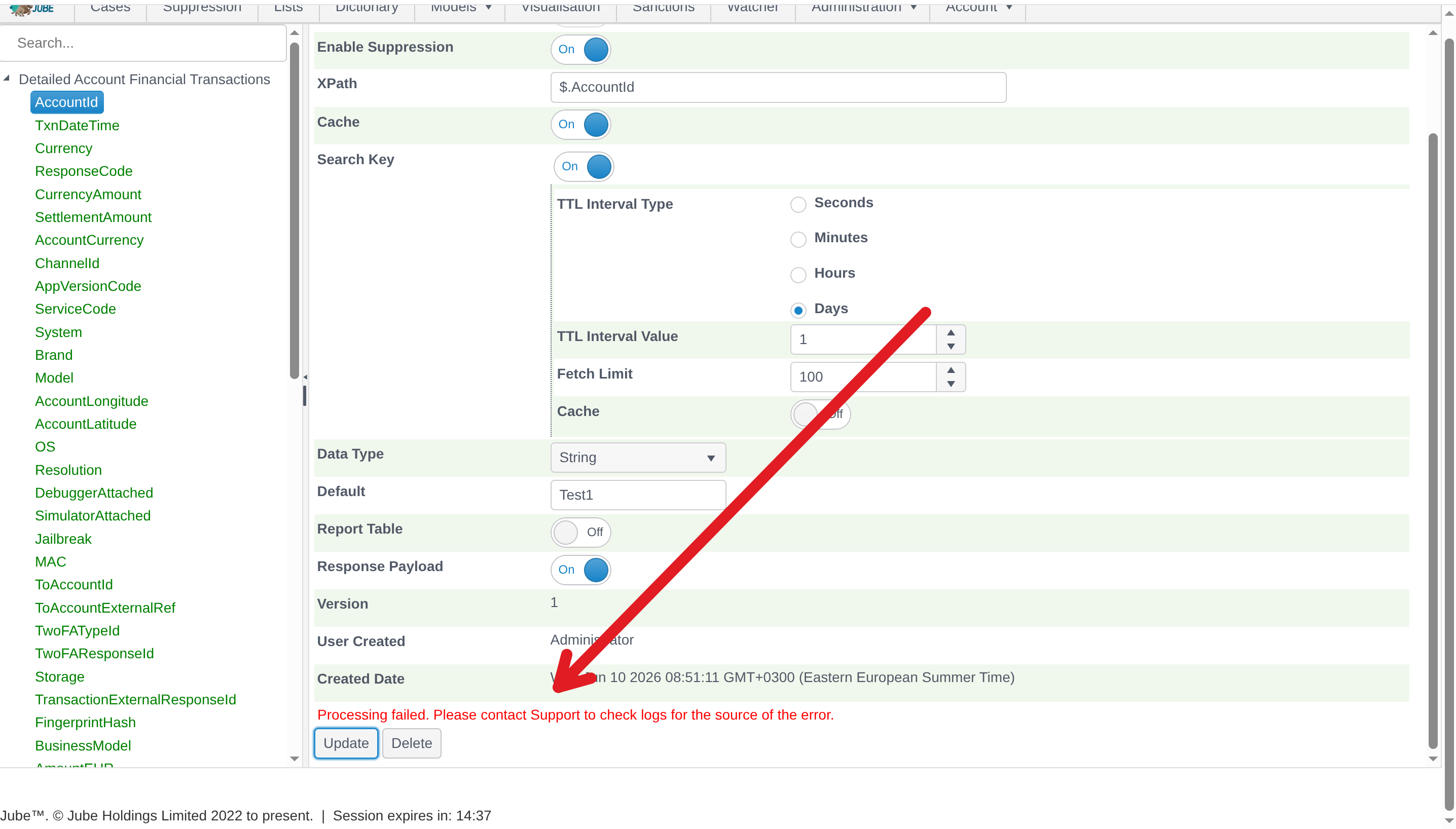
The exception does not cross the wire in the background either. The detail is available only in the logs:
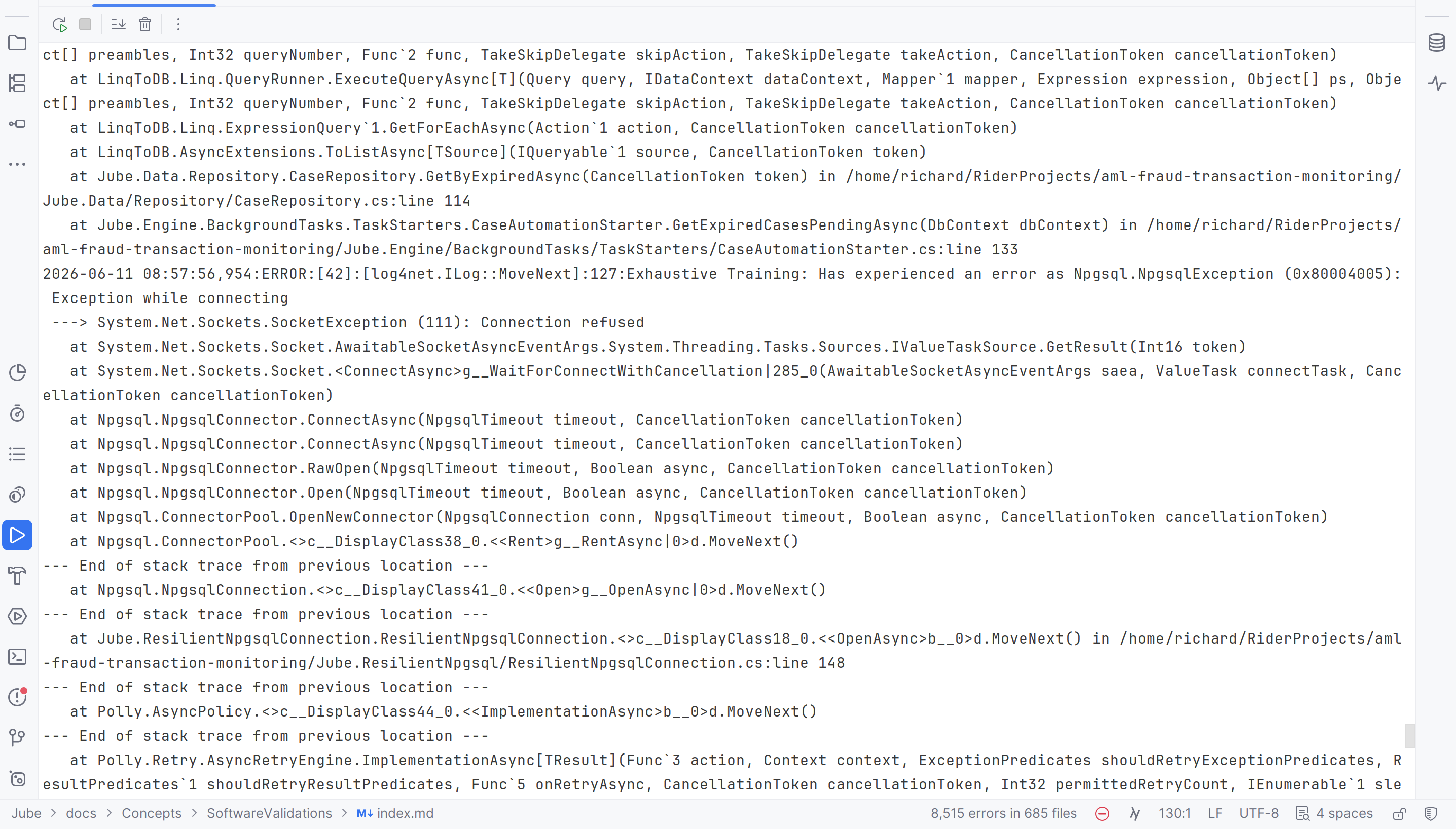
Certain administrative pages do bubble up more detailed errors. Their purpose is to author reports on the basis of SQL, where the text of the database’s own error is the feedback the author needs.
Direct Object Reference and Role Based Access (RBAC) Validation
The vertical slices that exist in Jube follow the pattern of Endpoint > Service > Repository > Data Context (Object Relation Mapper) > Database (the screenshots below show the original Controller form, whose logic now lives in the service). The great bulk of the system makes no direct SQL call to the database and instead pushes SQL down via LINQ. The approach is strongly typed throughout: models are mapped through the layers of the application, so there is no direct object reference. In the following case the input from the user is mapped indirectly to the object the Repository layer requires:
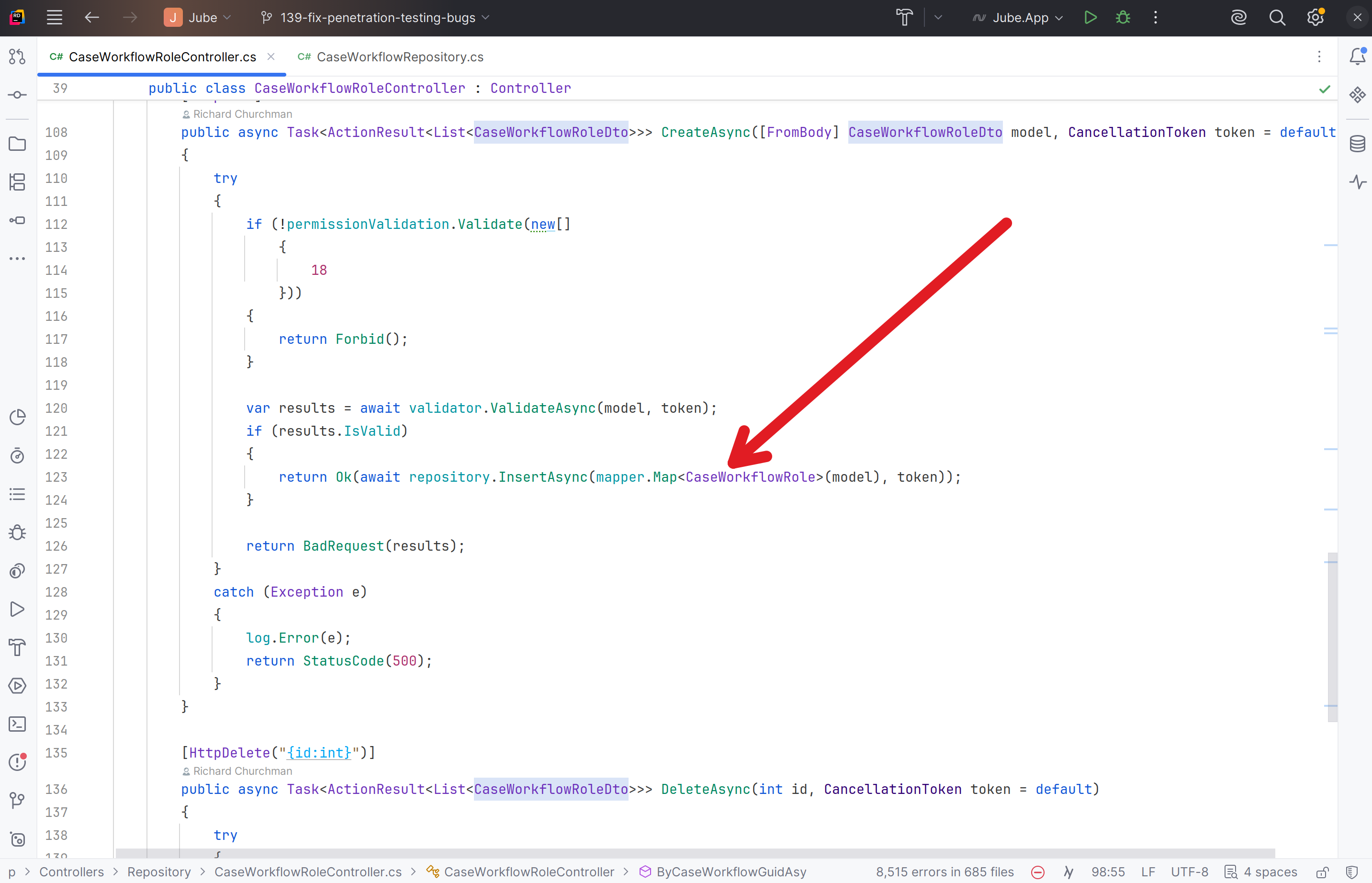
Meanwhile, the repository layer maps once more via LINQ to the underlying SQL:
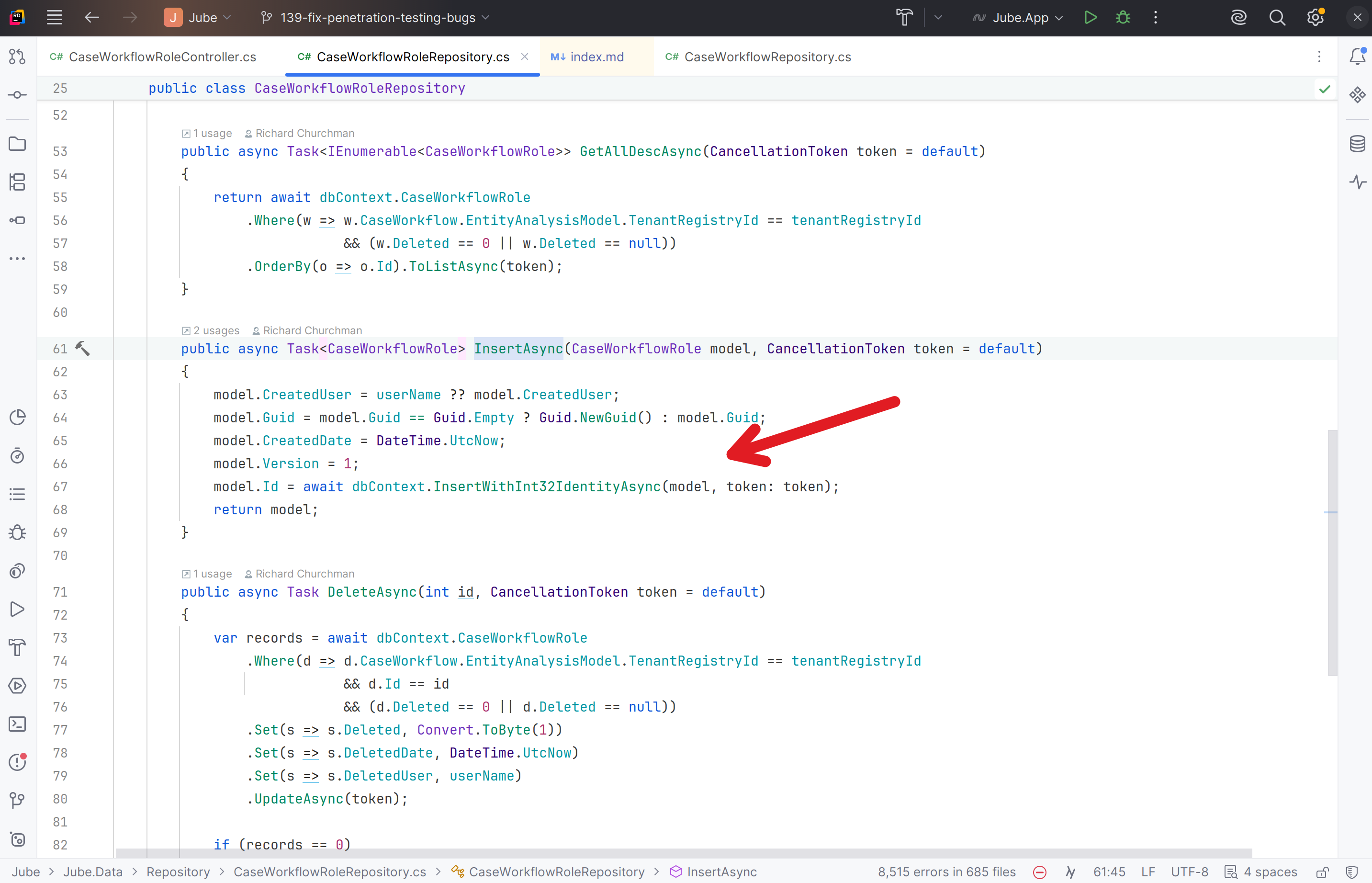
Much of the horizontal data isolation is achieved by passing the user’s identity as part of a parameterised query, where that identity is taken from the .NET authentication pipeline and from nowhere else:
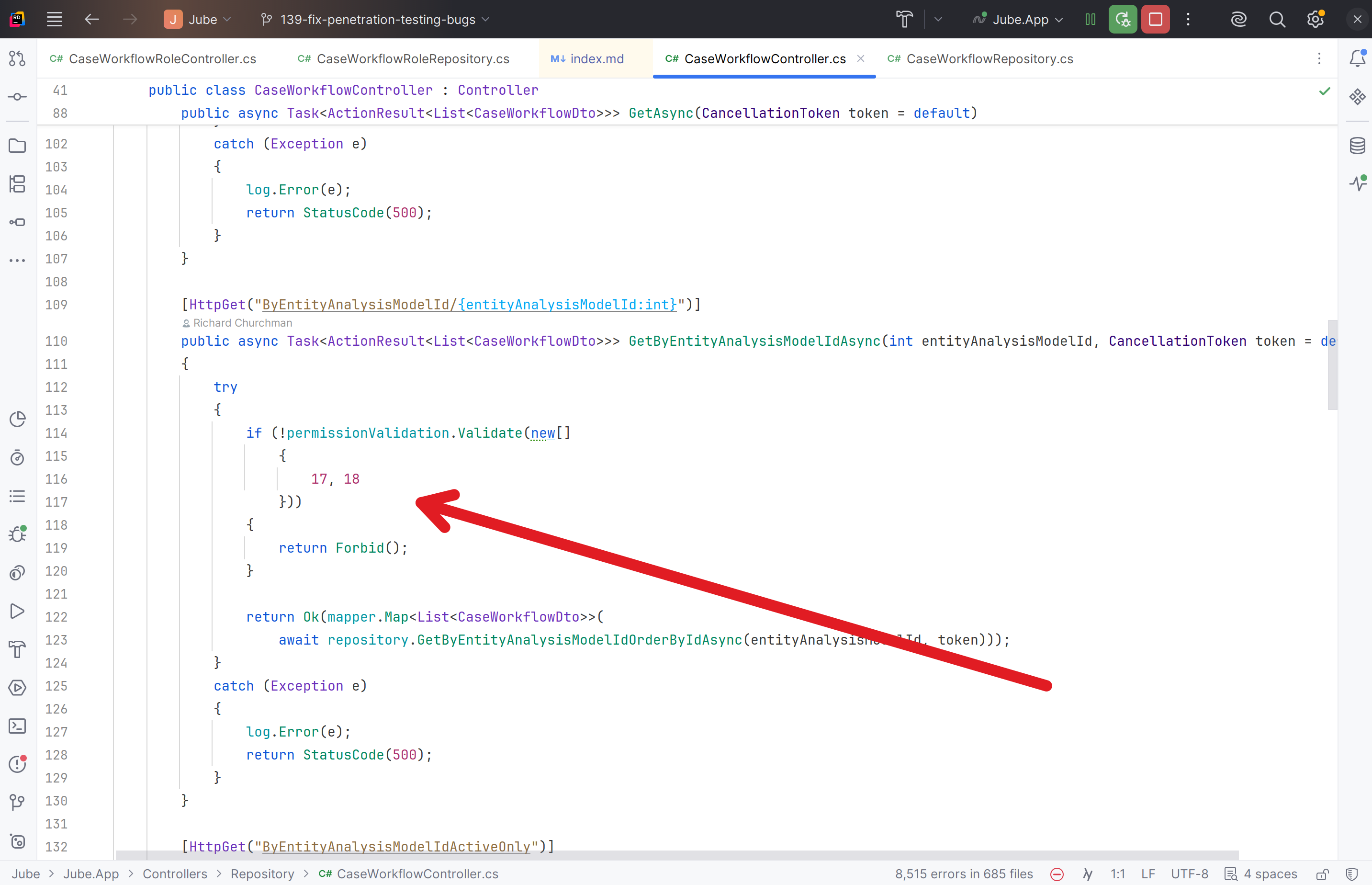
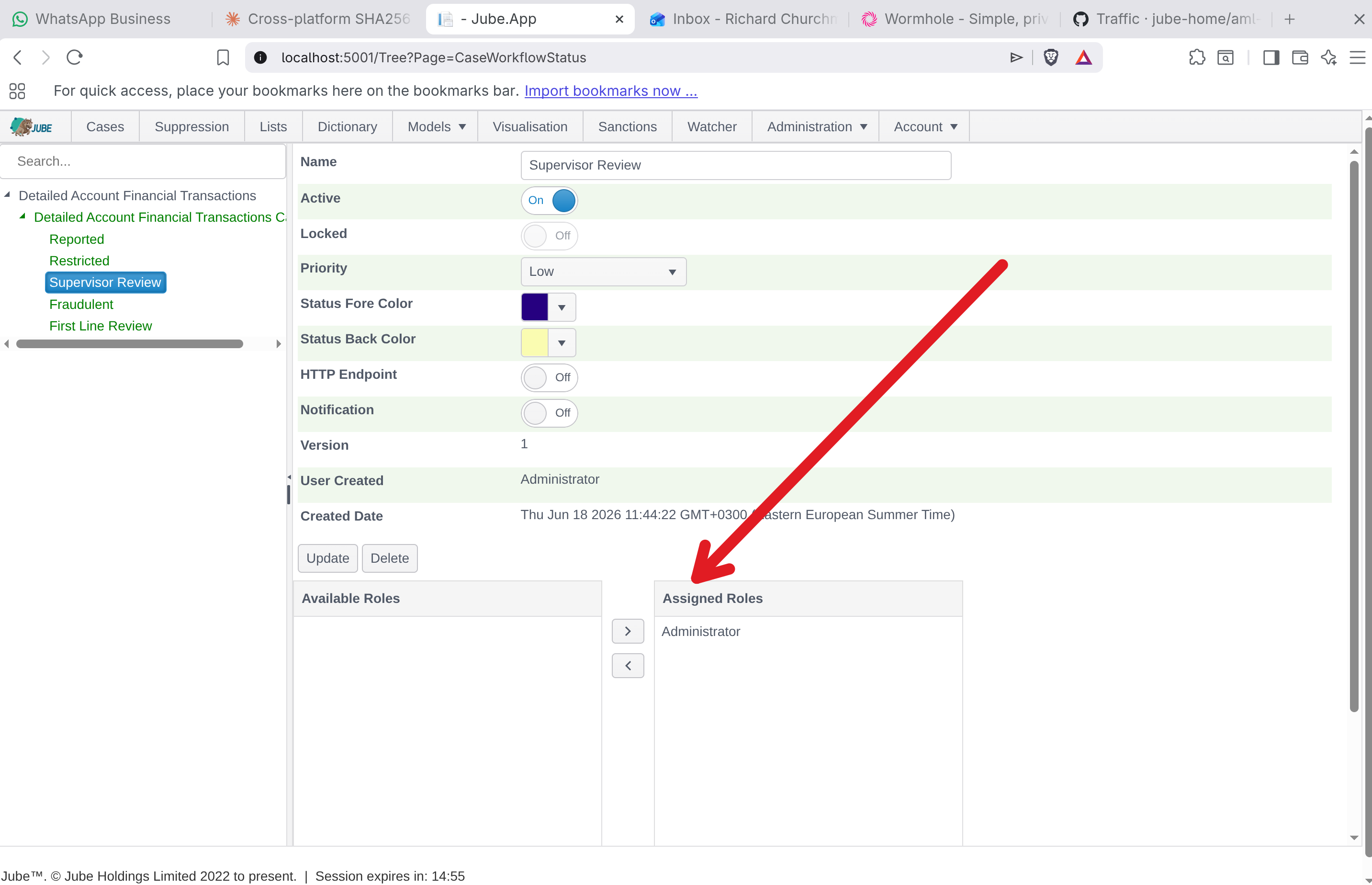
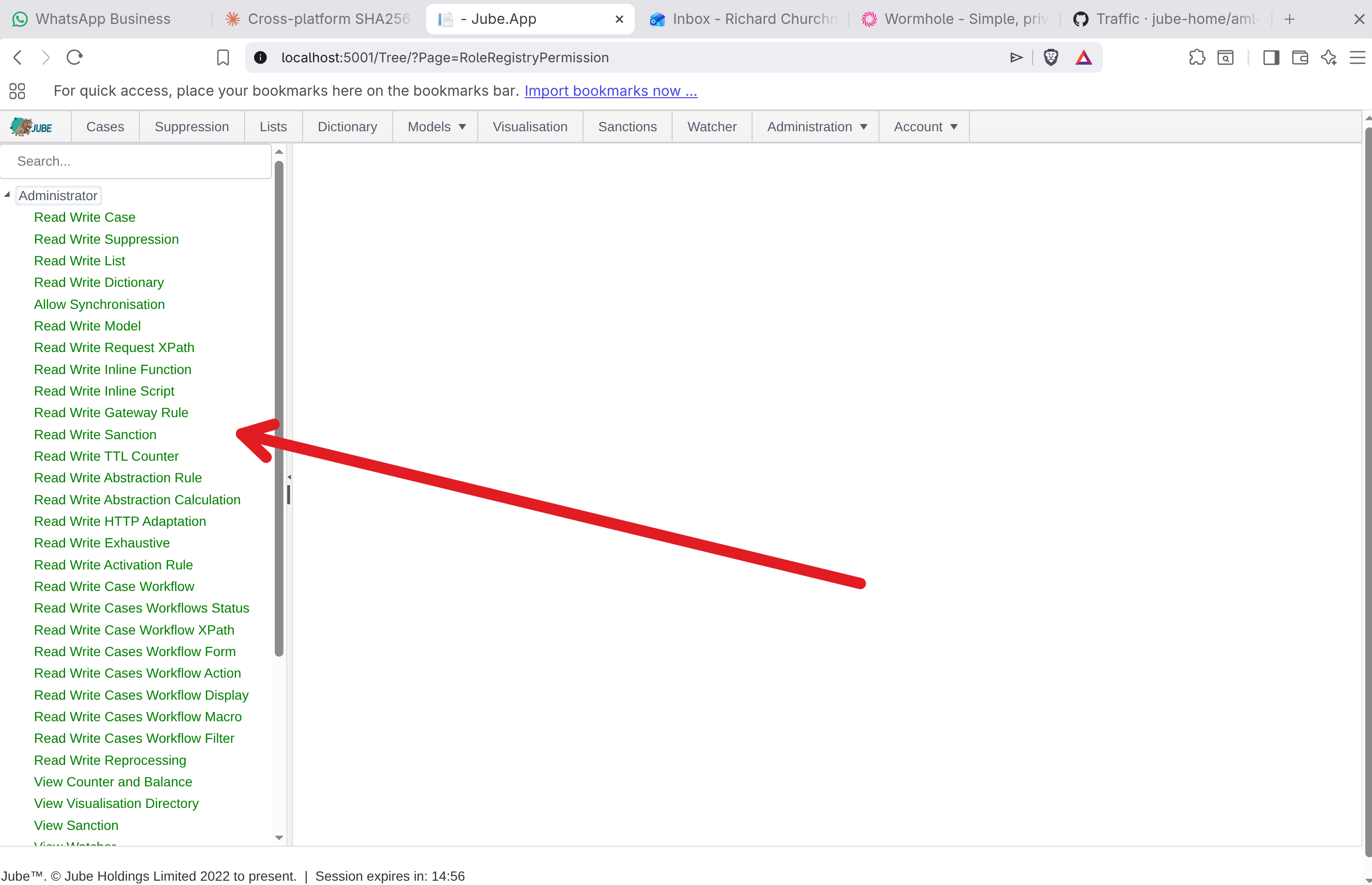
In addition to the validations set out above, every call to an API first validates RBAC for that functionality, which is addressable only where a Permission has been added:
Or in the case of horizontal data isolation: